Mosaic: The Oldest Pool Surface, the Most Debated Choice
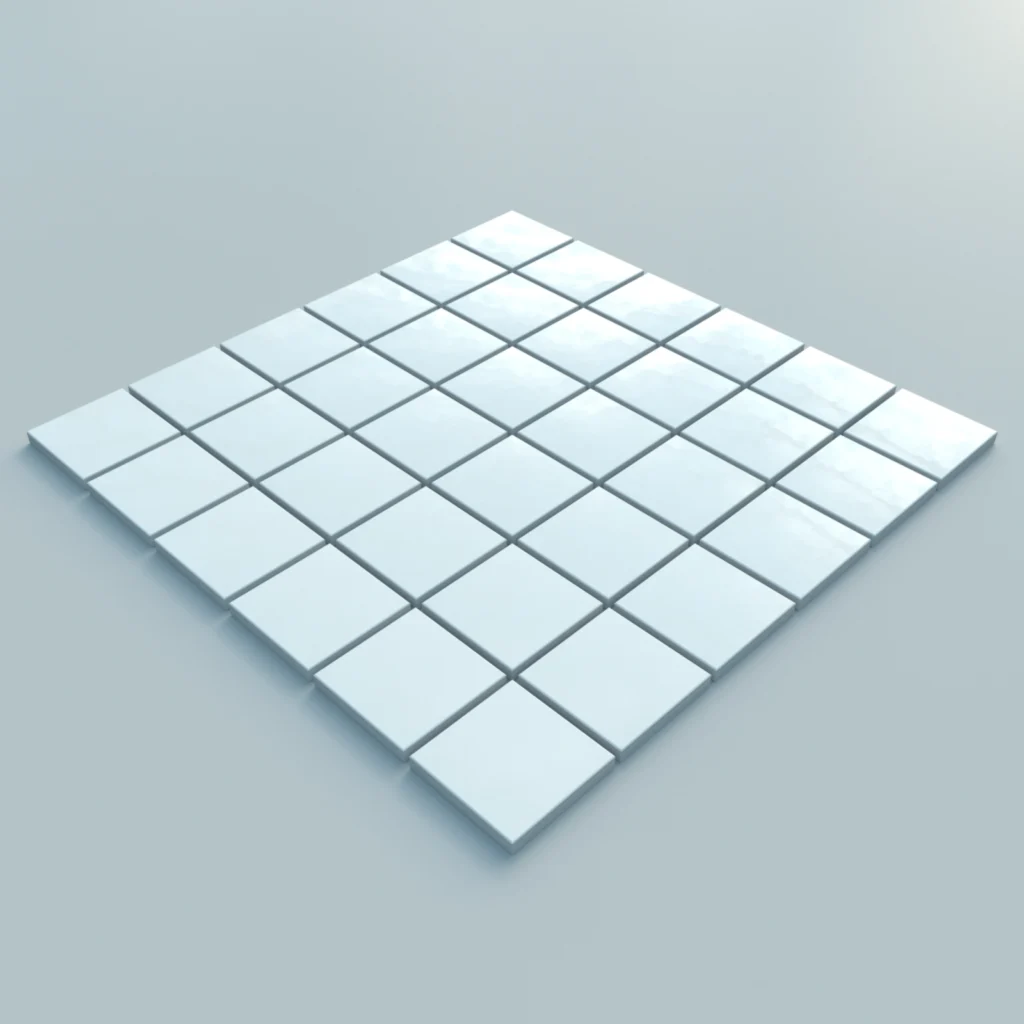
From Roman baths to modern boutique hotel pools, mosaic is the oldest aesthetic language of water surfaces. Combined with water, each small piece reflects light at a different angle — making the pool look not like a flat painted plane but a living, jeweled body in motion. But in today’s pool architecture, “mosaic” isn’t a single material. There are two main schools: glass mosaic and porcelain mosaic. The choice between these two often forms the foundation of years of decisions about maintenance, durability and aesthetics.
This article offers an objective comparison between the two — not just visual, but also from engineering, hygiene, maintenance, cost and long-term performance perspectives.
Strengths and Limits of Glass Mosaic
Glass mosaic’s undeniable advantage is its shimmer. Thanks to its transparent body, light passes not over but through the mosaic — producing the classic “jeweled pool” effect in its purest form. Its color palette is also exceptionally wide; the depth it can capture in dark blues, emerald greens and metallic tones is hard to find in any other material.
Its limits are equally clear. Underwater, glass can weaken over time under thermal stress, freeze-thaw cycles and chlorine-salt chemistry. Surface cracks, small chips around grout lines and color fading — particularly in outdoor pools — are common issues over the years. Glass mosaic also requires high maintenance; it is the material that responds fastest when water chemistry falls out of balance.
The Strengths of Porcelain Mosaic: The Aesthetics of Durability
Porcelain mosaic preserves a meaningful share of the aesthetic power of glass mosaic while offering a far more solid structure. Its 100% porcelain body is dense and non-porous, meaning chlorine, salt and disinfectants don’t affect the surface. High resistance to freeze and UV makes a lifetime of performance possible in outdoor pools.
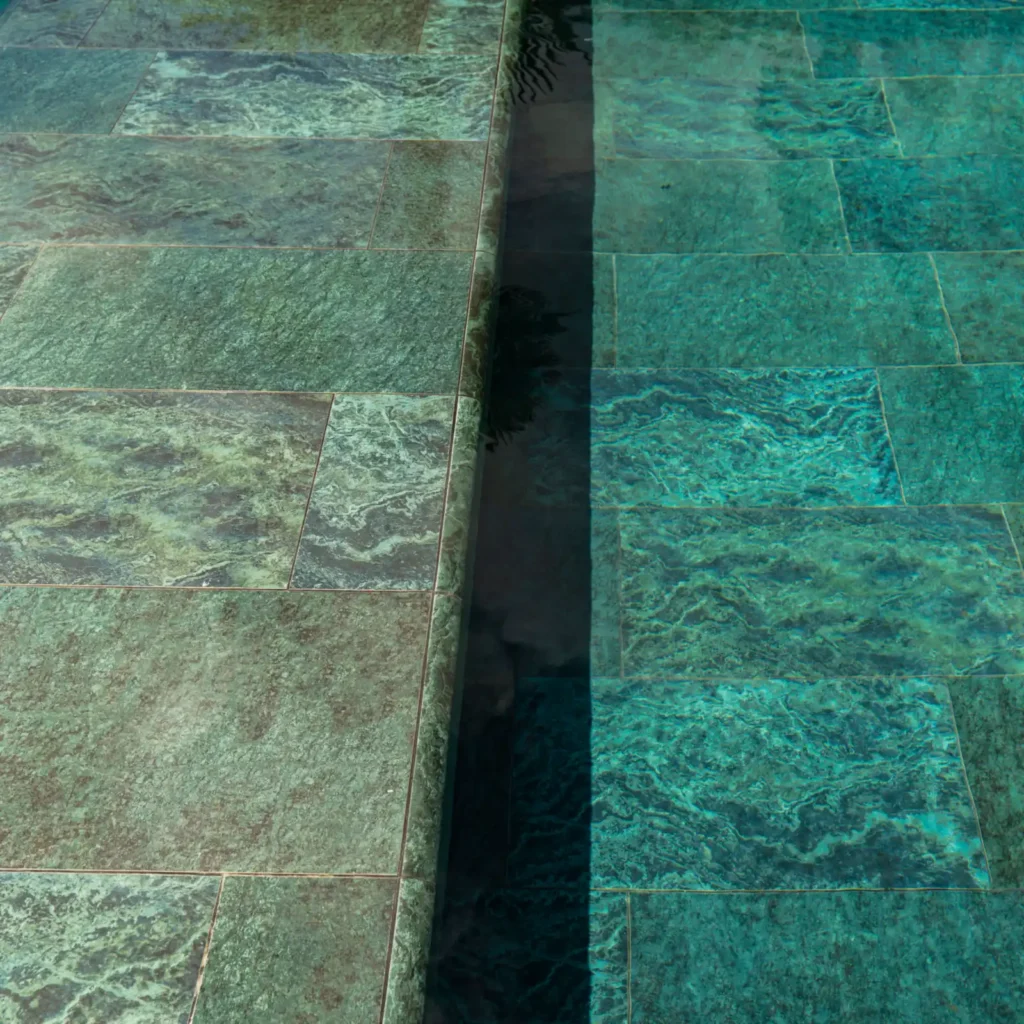
Aesthetically, porcelain mosaic delivers a look very close to glass mosaic’s “underwater shimmer” — especially in bevelled-surface productions, which refract light at multiple angles and create a moving texture. But the real strength of porcelain mosaic is that it doesn’t lose its visual quality over time. Even after a decade, it maintains the same color, texture and grout-line consistency — something glass mosaic cannot match.
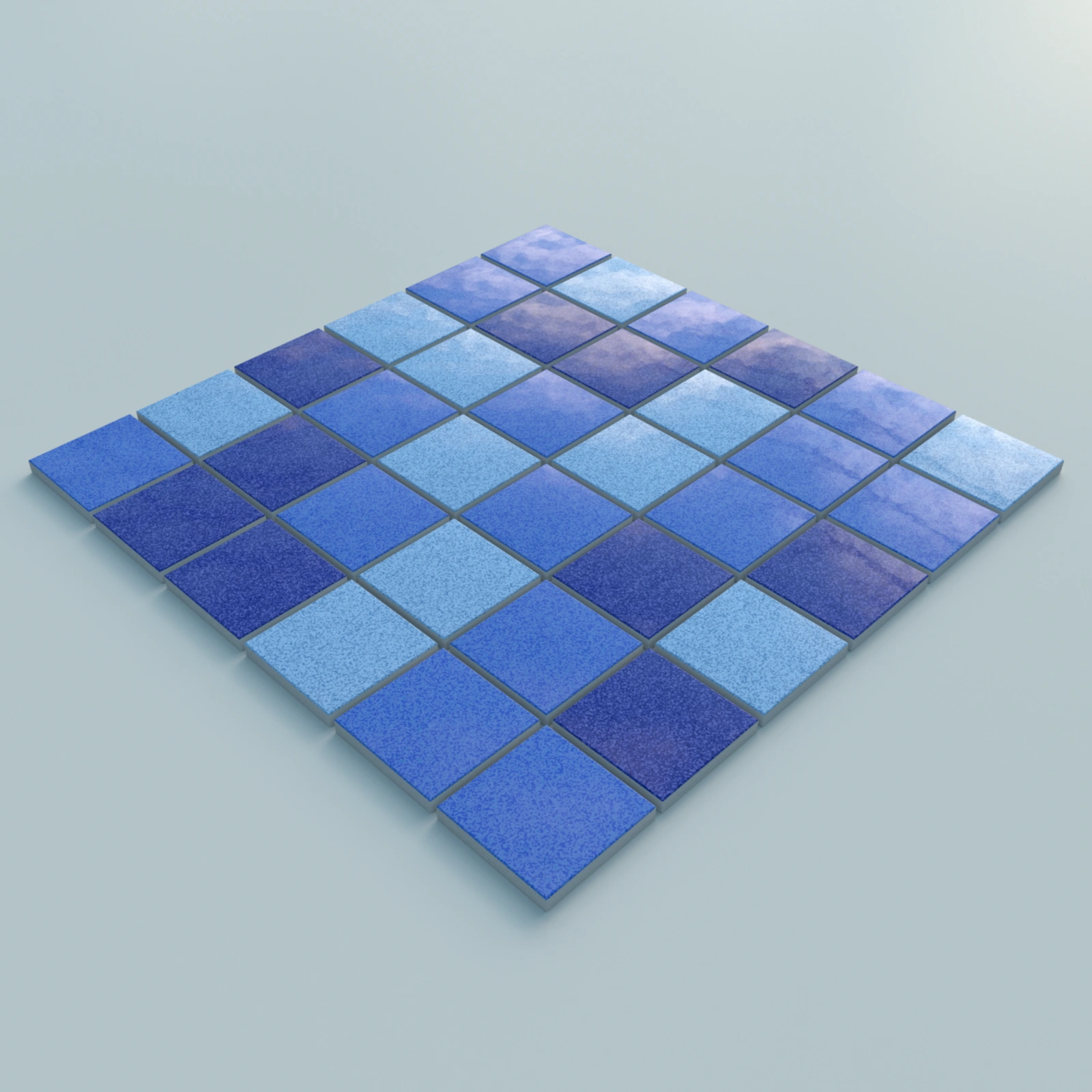
Detailed View: Poolarch’s Porcelain Mosaic Color Palette
The porcelain mosaic collection available at Poolarch spans an unusually wide range, from classic blue tones to highly bold accent colors. This variety means mosaic isn’t only a finishing material — it can be used as a design tool that builds the identity of an entire project.
For projects chasing the most saturated classic blue-turquoise dream: aqua blue, light blue, blue, dark blue, cobalt and turquoise options are available. For the green school, light green, green and dark green open the door to different pool characters.
For projects that want neutral and modern tones: white, gray, dark gray, anthracite and black. Black porcelain mosaic, in particular, is the foundational material of one of the strongest architectural trends of recent years — the “obsidian pool” aesthetic.
For bold and accent uses, the palette opens into a completely different territory: red, orange and yellow porcelain mosaics — indispensable pieces used for pool-floor logos, waterline emphasis, lane indication and step-edge warnings.
And finally, the most sophisticated expressions of porcelain mosaic, the blend versions: blue–light blue dual blend, blue–light blue–aqua blue triple blend and Cobalt Harmony blend. These bring multiple tones together on a single sheet, creating a texture that mimics natural water motion. This is one of the most important aesthetic points where porcelain mosaic separates itself from glass mosaic.
This collection developed by Serapool brings R11 slip-resistance class, water absorption below 0.5%, and resistance to UV and chemicals together in a single product. The Serapool infrastructure provides the critical technical foundation needed for batch consistency — even in a small-scale product like mosaic.
Comparison Snapshot: Which Wins on Which Criterion?
- Underwater shimmer: Glass mosaic is one step ahead, but bevelled porcelain mosaic versions close most of the gap.
- Freeze-thaw resistance: Porcelain mosaic wins decisively — risk-free in outdoor pools.
- Chlorine and salt resistance: Porcelain mosaic is chemically inert; glass reacts over time.
- Color stability (10+ years): Porcelain mosaic doesn’t fade; in glass mosaic, fading is a common issue.
- Slip resistance (R11): Porcelain mosaic is R11 by default; glass mosaic typically needs additional surface treatment.
- Color range: Glass mosaic offers a wider range of bright tones; porcelain mosaic is stronger in neutrals and blends.
- Maintenance: Porcelain mosaic carries a far lower maintenance burden.
- Long-term total cost: Porcelain mosaic eliminates renovation and replacement cycles that glass mosaic typically demands.
The conclusion: glass mosaic may be the right call for a one-time visual statement — but for a long-life, high-durability, hygienic pool with low maintenance cost, porcelain mosaic is technically a much sounder choice.
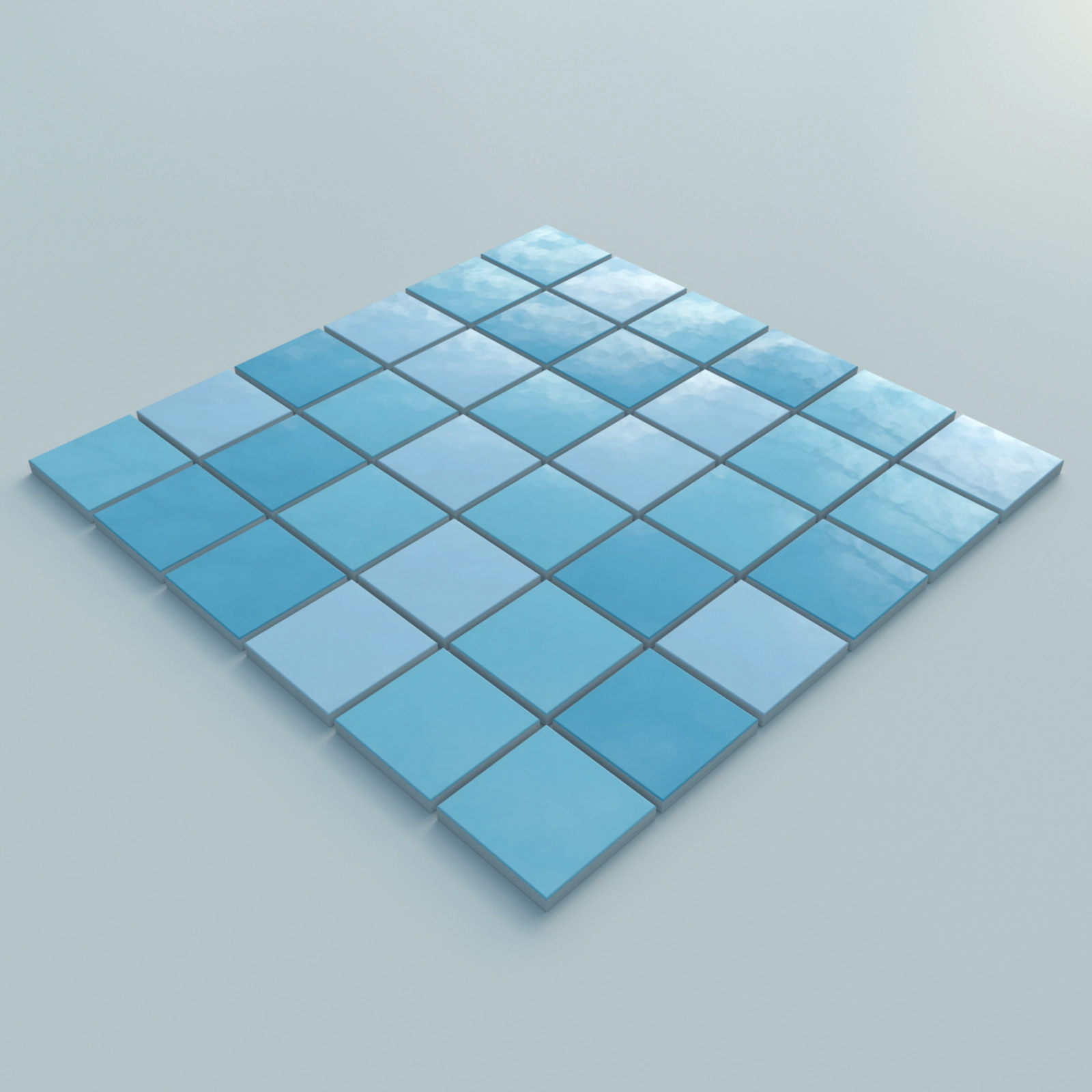
Architectural Use Scenarios
Porcelain mosaic shines especially across three different scenarios in pool design:
- Full mosaic surfacing: The classic interpretation, where a single mosaic language covers the pool floor and walls. Blend versions in this scenario mimic natural water movement.
- Accent and emphasis use: The pool is mainly clad in large-format ceramics; mosaic is used only as a band — at the waterline, around step edges, or on the stair wall. Red, yellow, orange and black mosaics dominate this scenario.
- Logos, medallions and custom design: Embedded logos, medallions and geometric compositions on the pool floor — common in hotel and boutique facilities — are exactly where the small scale of porcelain mosaic becomes its biggest advantage.
Poolarch’s Recommendation: Which Mosaic Is the Right One?
At Poolarch, the reason we recommend porcelain mosaic for the majority of pool projects is technical consistency. Glass mosaic can deliver the “one perfect night” effect a designer might want; but the “ten unchanged years” a client wants is, almost always, porcelain mosaic. The question that simplifies the decision: are you designing your pool to be photographed once, or to deliver the same impression every day for a decade? If your answer is the first, glass mosaic may be an option. If it’s the second, porcelain mosaic is the unambiguously correct choice.
Get Clear Information on Pool Porcelain Prices
Confused between pool ceramic prices, pool tile prices and pool porcelain prices? Let the Poolarch team walk you through which collection fits your budget and which complementary products (grate, coping, stair anti-slip) suit your project — one by one. We offer transparent, per-m² pricing with the same clarity for both installers and end customers.
Get Your Per-m² Price Instantly — Quote Within 24 Hours
Send us your project’s m², overflow system and chosen collection via WhatsApp, and receive your customized quote within 24 hours. Message us on WhatsApp for an instant quote.