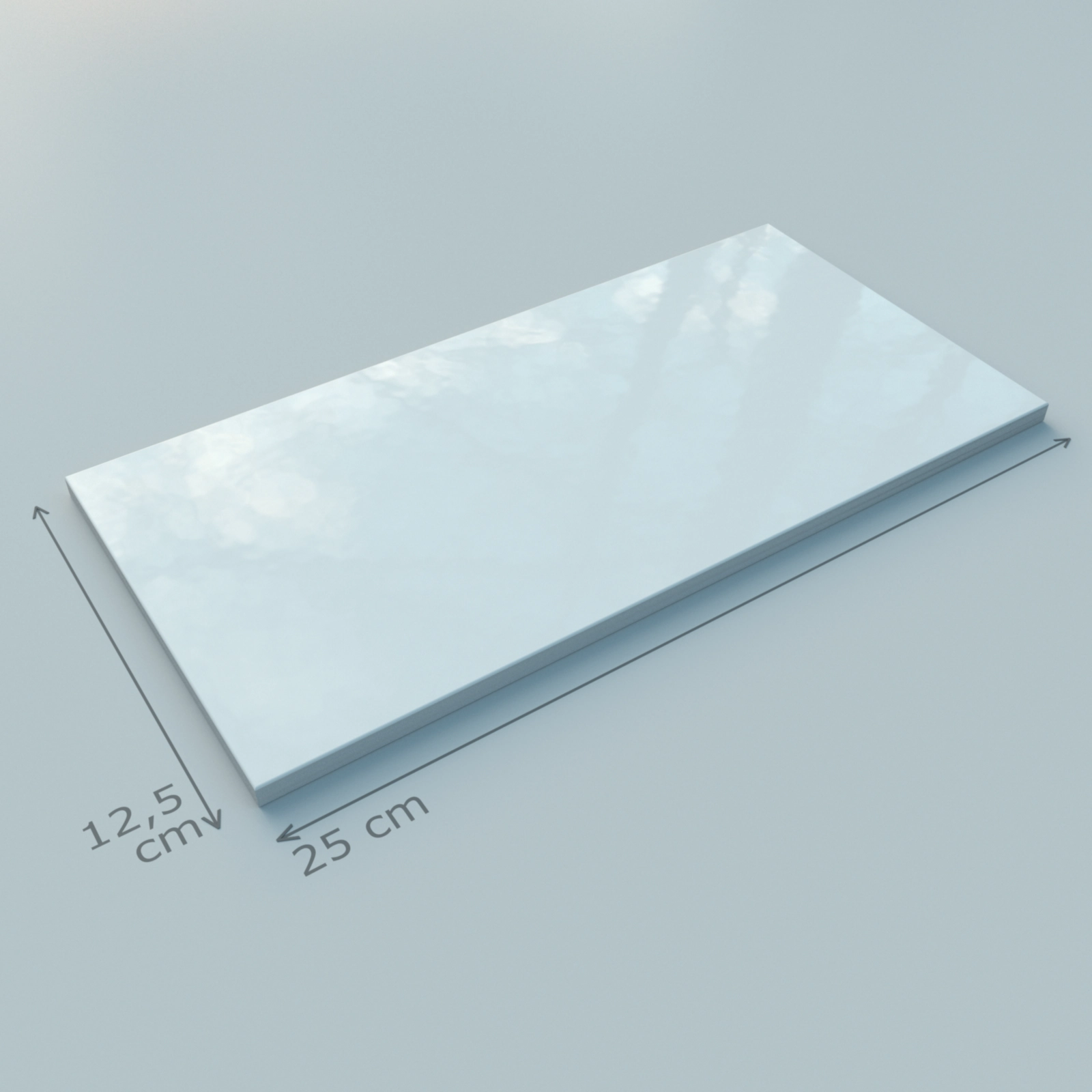
The real character of a porcelain pool comes not just from the tile, but from the grout color that frames it. The same 15×15 cm white porcelain becomes a modern spa with light grey grout, a graphic mosaic with black grout, or a minimal continuous surface with white grout. Pool grout color selection is the final fine-tune of the architectural decision — it controls how light reflects off the water, how cleanliness is perceived, and how unified the full pool system reads.
This guide covers grout color from both aesthetic and technical angles: which tile pairs with which grout, cement vs epoxy, joint width, pool interior vs terrace, and how the choice influences porcelain pool prices.
Why Pool Grout Color Selection Is a Strategic Decision
Grout makes up only 3–6% of the tiled surface area, yet it can drive almost half of the perceived color of the pool. The eye reads the contrast between tile and grout as visible “grid lines”. High contrast pushes the tile forward and makes the grid dominant. Low contrast produces a continuous, monolithic surface where the water color absorbs the tile. That is why grout color cannot be chosen abstractly — it has to be decided together with tile, pool type (overflow system), lighting and target aesthetic.
1. White Porcelain with Light or Medium Grey Grout
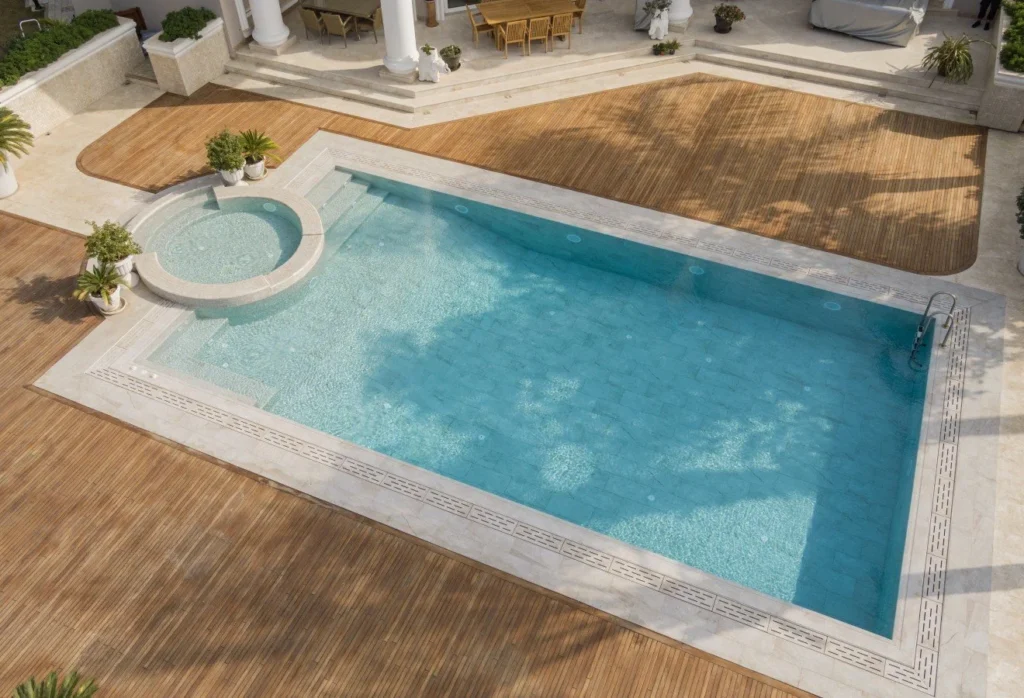
White pool porcelain (e.g. Serapool’s white series) produces the cleanest silver-blue water color. Paired with white grout the surface looks continuous, but chlorine, calcium and airborne dirt slowly yellow white grout, and the effect is visible. Light or medium grey grout keeps the perception of cleanliness, gives a minimal rhythm to the surface and ages predictably. Tile size matters: see our pool tile sizes guide for how grout reads on each format.
2. Blue and Turquoise Porcelain with Neutral Grout
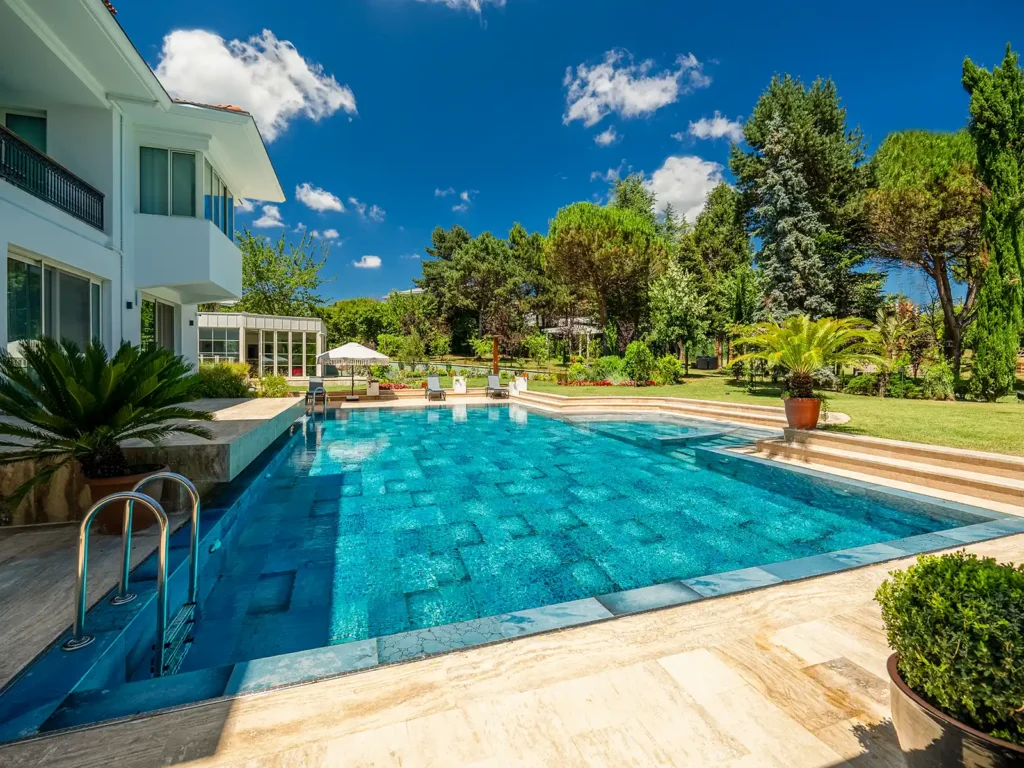
Blue and turquoise tiles (Piazza Cobalt, Blue Bead, Firuze) saturate the reflected light from the water. For these tiles grout should stay as neutral as possible — medium grey or anthracite. White grout creates a high-contrast grid that makes the surface read as “mosaic signage” rather than swimming pool. Anthracite grout, on the contrary, frames each tile, deepens the texture and hides chlorine staining.
3. Natural-Stone-Look Porcelain with Warm-Tone Grout
For natural-stone-look series like Silver Travertine, Natural Mocha or Sera Stone, choose grout one shade lighter or darker than the tile’s main color family. Beige tile pairs with beige or sand grout; grey-veined tile pairs with light grey or beige. The goal is not to frame the tile, but to read the whole surface as one continuous natural slab. White grout breaks the warmth here — avoid it.
4. Dark and Black Porcelain with Tonal Grout
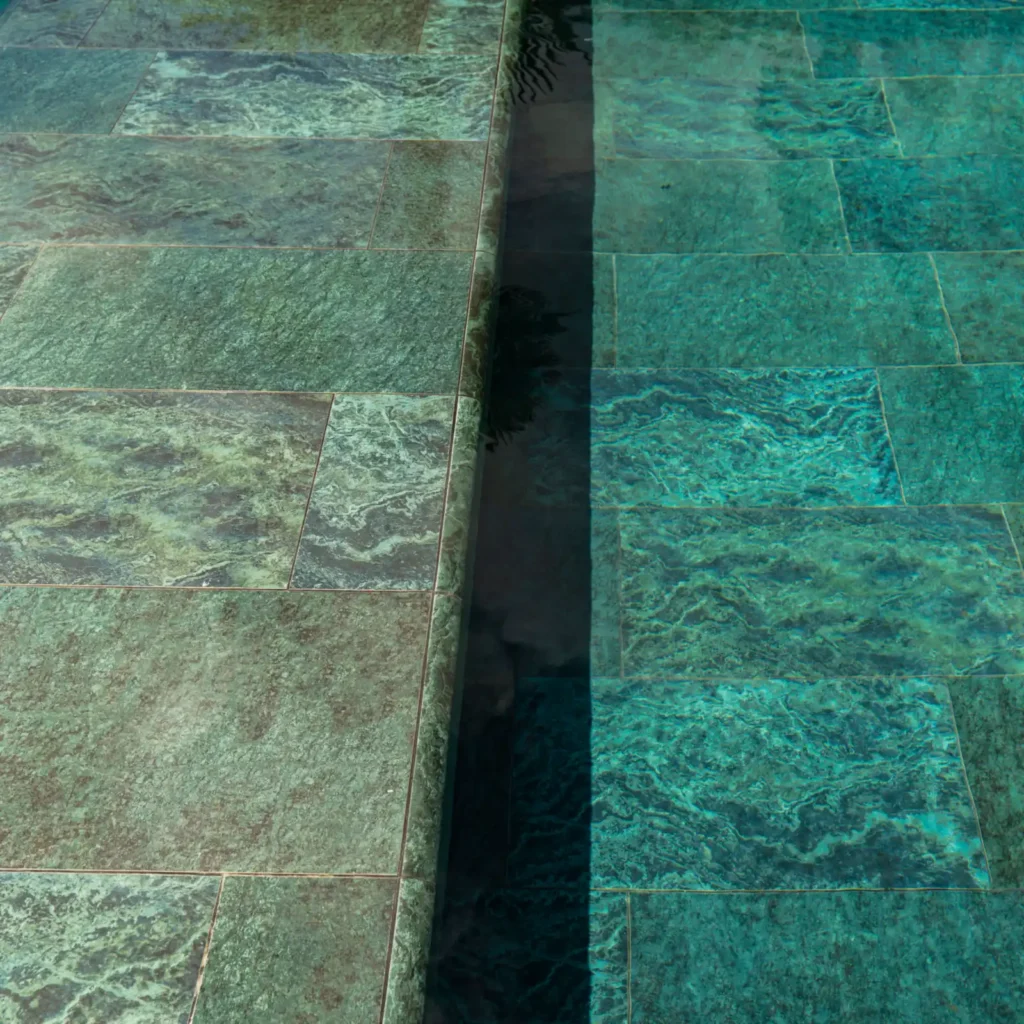
Dark tiles (Relax Cobalt, Dark Tone, Green Malachite) push water toward deep emerald or cobalt blue. For these pools, grout must be tonal — close to the tile’s dark family. Light grout looks like white lines on a dark surface and amplifies any installation imperfection (line drift, cut mismatch). Dark pools are therefore the most demanding group for both grout quality and color choice.
5. Cement-Based (CG2) vs Epoxy (RG) Grout
Color choice is half the decision; chemistry is the other half. Chlorine and salt water (in salt-system pools) gradually erode cement-based grouts. Per EN 13888, CG2 WA cement-based grouts are the minimum acceptable line for pool interiors; for long life, RG (reactive/epoxy) grout is the recommended specification. Epoxy grout is waterproof, chlorine- and UV-stable, and roughly 2–3× the material cost of cement-based. Our installation and maintenance guide details grout selection inside the build.
6. Joint Width, Waste Factor and m²
Standard joint width for the pool interior is 2 mm — enough for thermal expansion, thin enough for a clean visual line. Anti-slip terrace surfaces go up to 3–5 mm. As joint width grows, the visible grout area grows too, and the same color reads stronger on a wider joint. Grout material must also be calculated against m² when ordering — our pool tile m² calculation guide walks through the consumption formula.
7. Pool Interior vs Terrace Grout: Same Color?
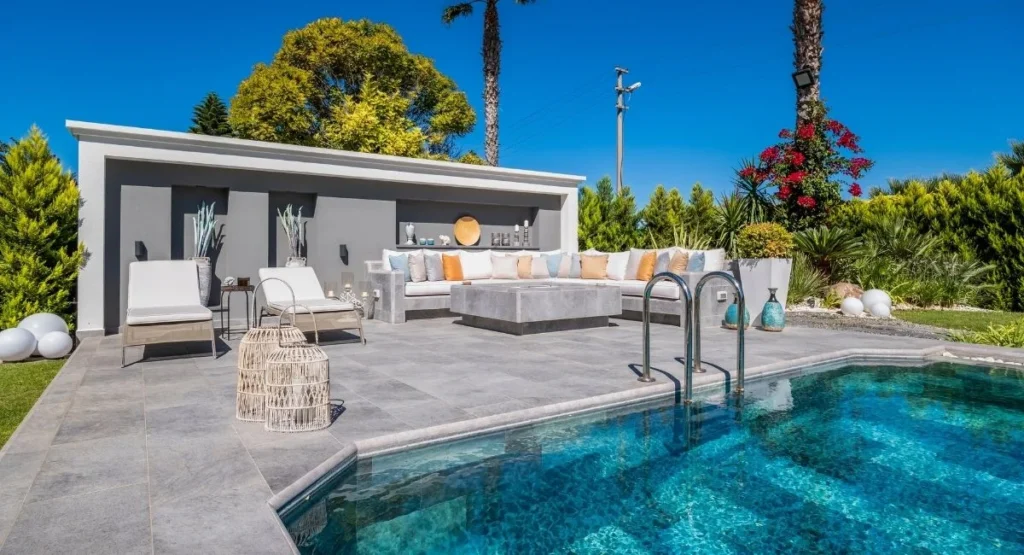
When interior and outside surfaces use different tiles (e.g. 15×15 blue inside + Petit Carré grey outside), grout colors can differ — but they should come from the same family for visual continuity. For example, medium grey inside and light grey outside. In the transition zone (around the coping) starting with the interior color and softly transitioning to the outside color prevents a visual break. With unglazed copings like the Apache Unglazed Porcelain Pool Coping, grout reads more strongly — color match is critical.
8. Performance Under Chlorine, Salt and UV
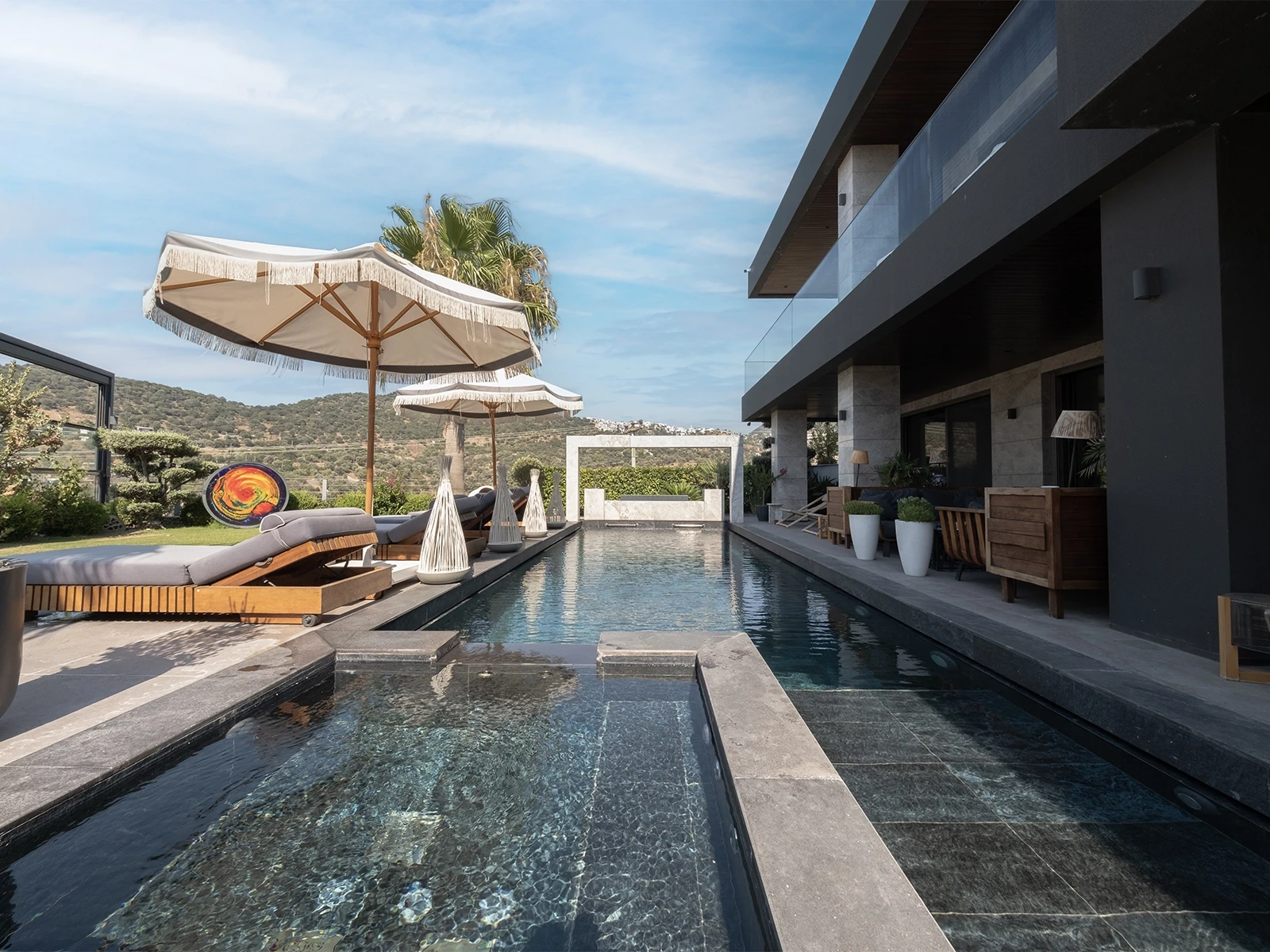
The same color pigment ages differently in different binders. Epoxy grout holds its color under UV, while cement-based grout fades on light tones and shifts grey on dark ones. For long-life aesthetics, epoxy + mid-tone pigment is the safest combination. In salt-water pools, efflorescence can leave white streaks, and these are far more visible on dark grout — another reason dark pools need impeccable installation.
9. Serapool System Integrity and Grout Match
The big advantage of Serapool full-body porcelain is that pool interior, grate, step and terrace series come from the same color-texture family. So a single grout decision stays consistent across the whole system — no color drift, no batch difference, no tonal shift at corners. R11 anti-slip and water absorption below 0.5% also help the grout last, because the tile is not pulling moisture into the joint.
10. Budget Impact and Porcelain Pool Prices
Grout is often overlooked in porcelain pool prices. Yet for a 200 m² project, epoxy grout adds roughly €1,500–€3,000 over cement-based — in return for 10+ years of additional life and stable color. Combined with the right color decision, it pays for itself in both aesthetics and maintenance. To match color and chemistry to your project, share the drawings with us via WhatsApp and receive a complete recommendation.
To sum up: pool grout color selection is not a small detail but the closing sentence of the architectural decision. Combined with the right chemistry and the right joint width, a porcelain pool keeps its first-day character for decades.