Porcelain Pool Tile vs Alternative Pool Finishes: A Complete Comparative Guide
When designing or renovating a pool, one of the most consequential decisions is the material that will line the surface that touches the water. This choice directly shapes the pool’s lifespan, maintenance load, aesthetic personality and total cost of ownership over the years. Globally, four options dominate the discussion: porcelain pool tile, natural stone, vinyl liner and fiberglass. In this guide we look at how Serapool full-body porcelain compares to the other three from architectural, engineering and cost perspectives.
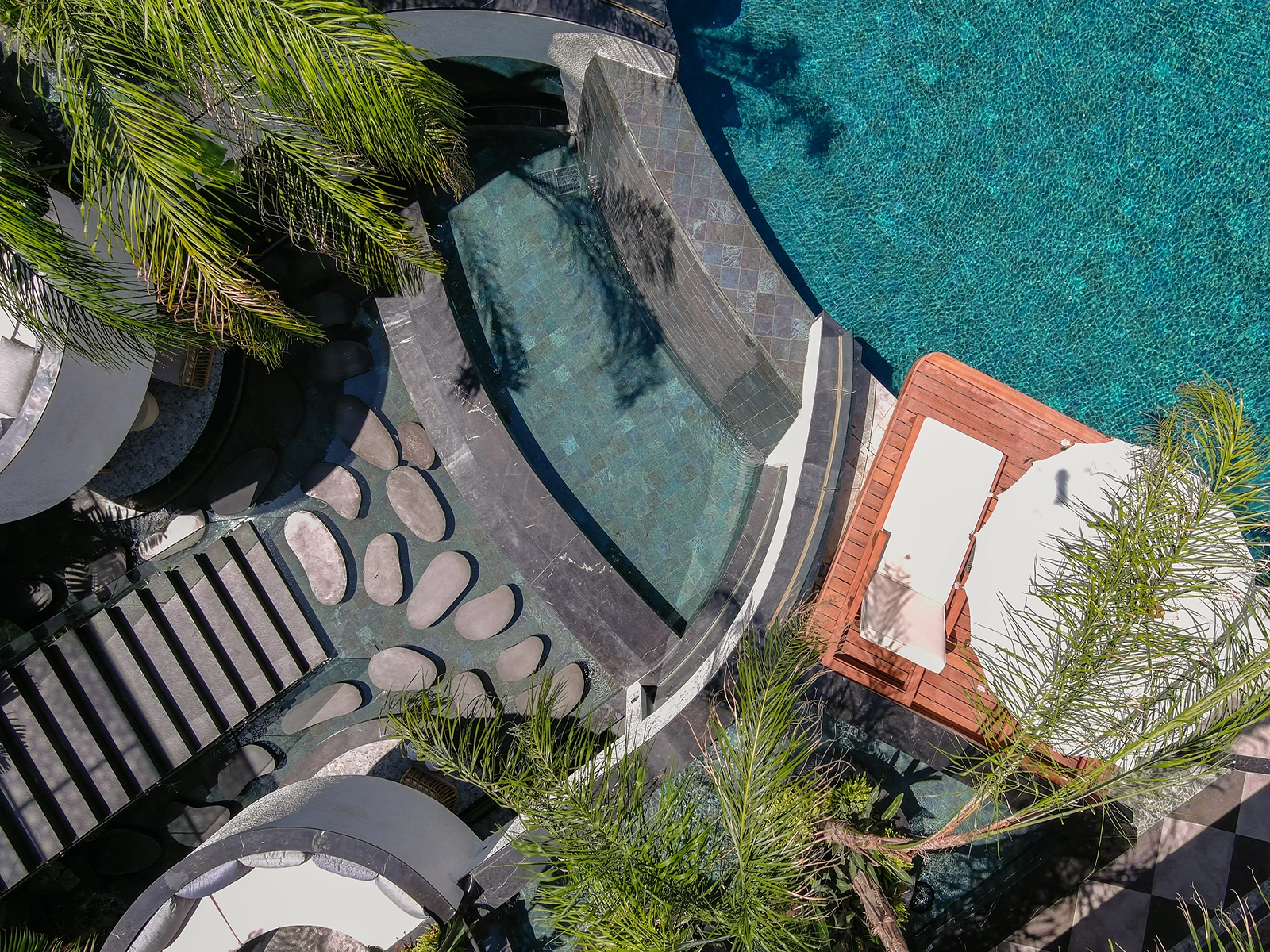
Porcelain Pool Tile: Full-Body Engineering
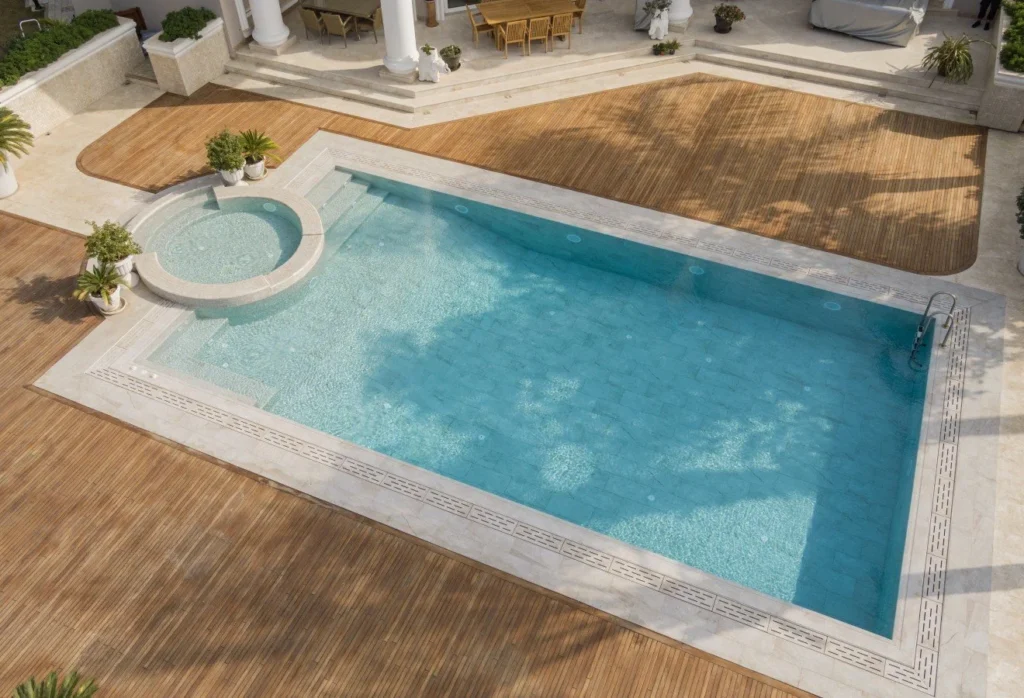
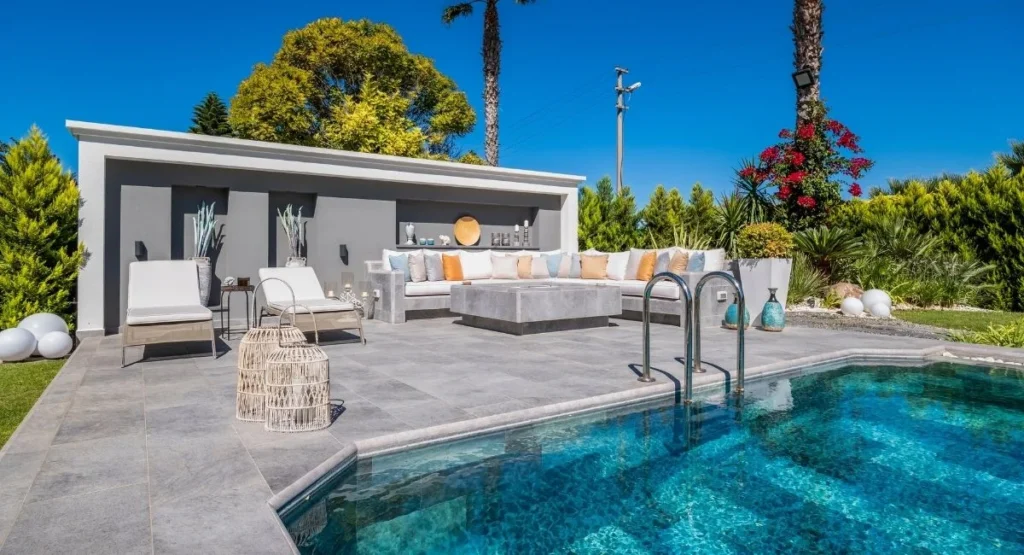
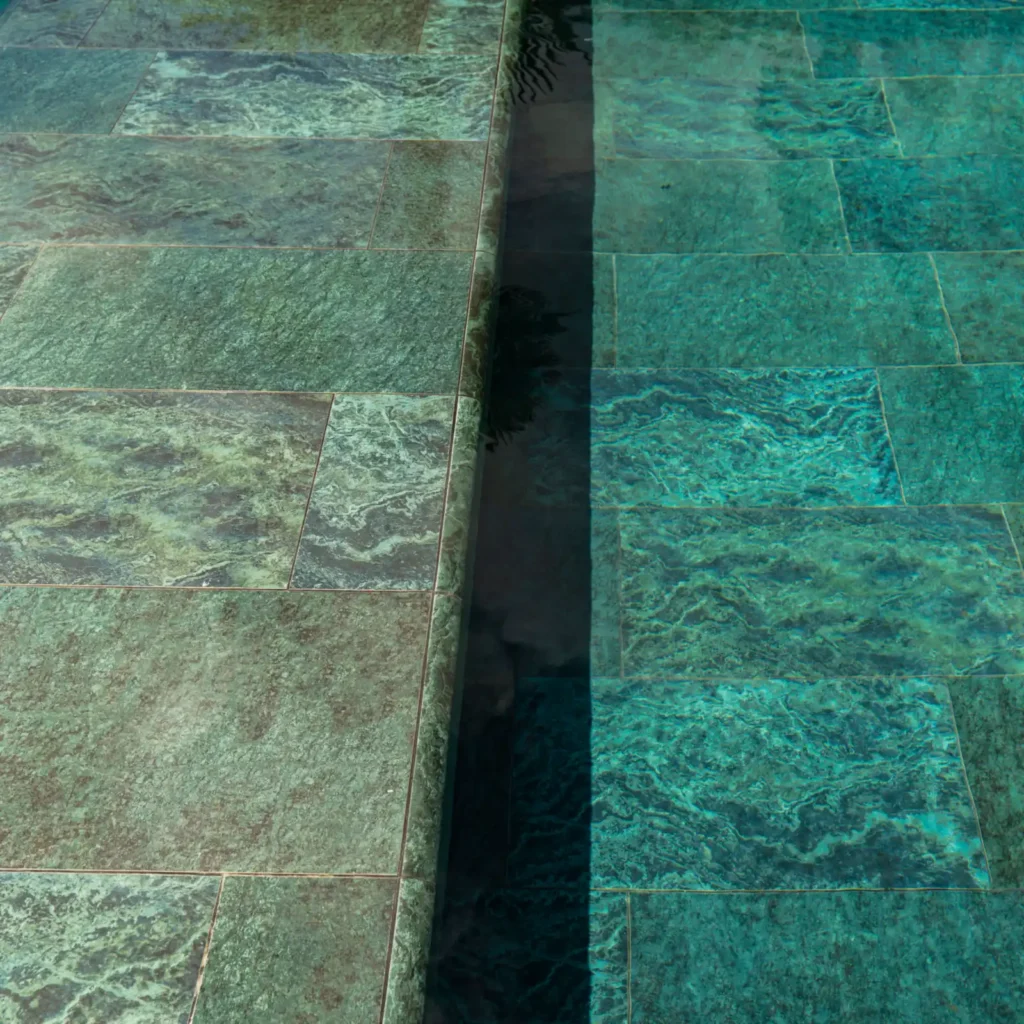
Serapool porcelain pool tile is a full-body product engineered specifically for wet environments, with a water absorption rate below 0.5% and R11 anti-slip performance. Color and texture are not just on the surface – they run through the entire body of the tile, so even years of wear cannot erase its character. The material resists freeze-thaw cycles, chlorine and salt extremely well, and the same collection delivers interior tiles, overflow channels, grates, steps, copings and terrace pavers as a single integrated system.
This system integrity is the biggest architectural advantage: the pool interior, the surround and the stair tiles all come from a single supplier with matching color, texture and technical class. A collection such as Relax Blue pool tile can be planned together with its own coping, grate and anti-slip terrace tiles from the same family.
Natural Stone Pools: Authentic Beauty, Heavy Maintenance
Travertine, marble, quartzite and natural granite bring an unmatched warmth and texture to a pool. But the porous structure of natural stone pushes water absorption into the 2-8% range — roughly 10 to 16 times higher than porcelain. This produces several real-world consequences: chlorine and salt slowly etch the calcium surface, freeze-thaw cycles trigger micro-cracks, and the stone must be sealed (impregnated) on a recurring schedule.
Architects who love the warmth of natural stone but want a lower maintenance load often switch to porcelain collections that mimic the look — without the absorption problem. Cotto anti-slip porcelain is a good example of this approach. Annual silicone repair, grout breakdown and grey staining — all standard pain points of natural-stone pools — largely disappear when the surface is full-body porcelain.
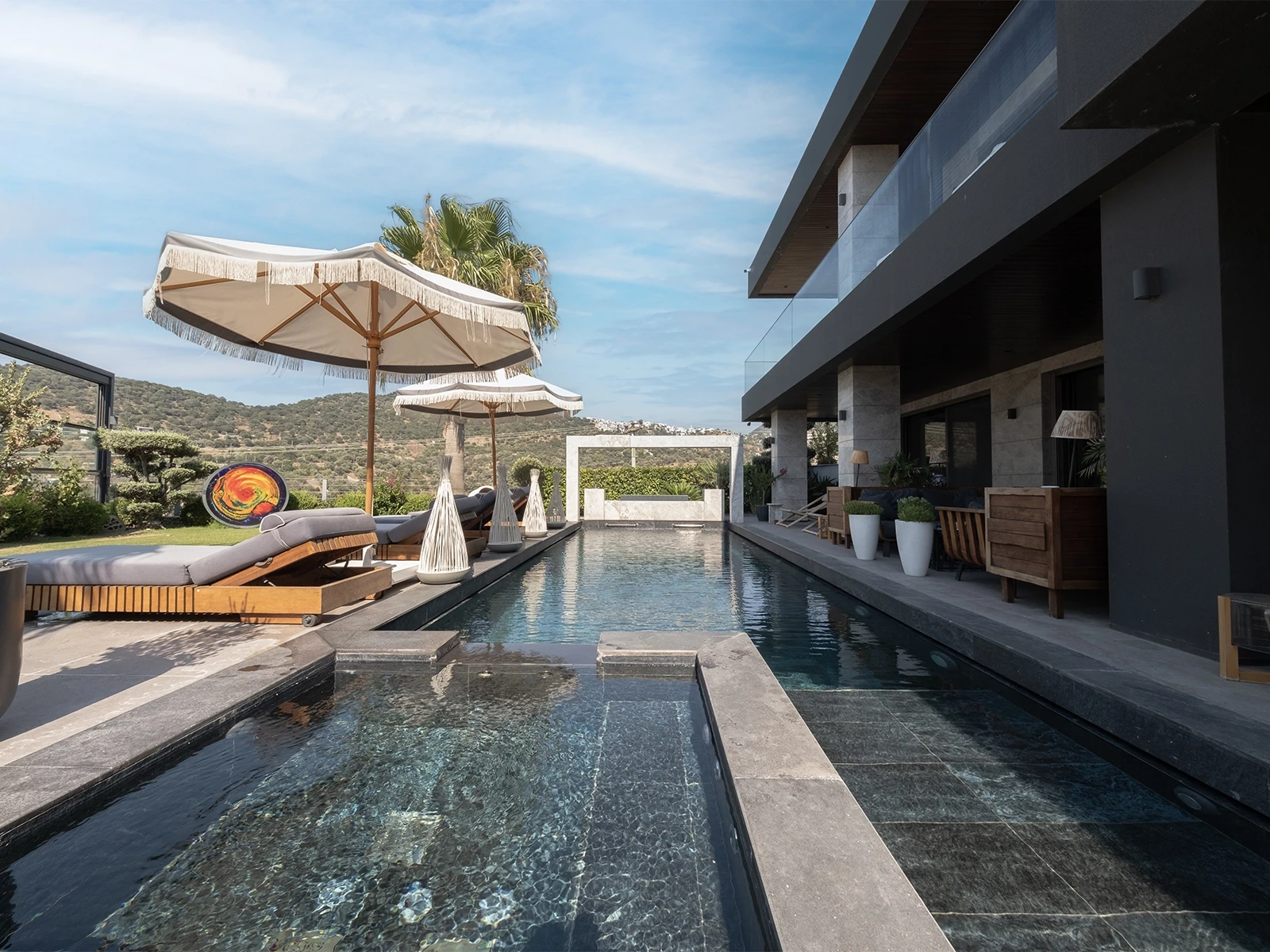
Vinyl Liner Pools: Fast to Build, Short to Live
A vinyl liner is a continuous PVC film laid over the inner shell of the pool. Initial cost is low and installation is fast, which is why it is often chosen for budget-driven or quick-turnaround residential projects. However, the typical lifespan of a vinyl liner is just 7-12 years, and in hot climates with heavy UV and chlorine exposure that window shrinks further. Color fading, wrinkling, tears and slow leaks are standard liner problems.
A vinyl pool needs a complete liner replacement roughly every decade: the pool is drained, the old liner removed, a new sheet heated, stretched and locked into the perimeter profile. A porcelain pool — although the initial investment is higher — does not enter this replacement cycle for 30+ years. As we explained in our freeze-thaw resistance article, a properly specified porcelain holds its structural integrity even in cold climates.
Fiberglass Pools: Factory-Built, Limited Flexibility
A fiberglass pool is a single-piece, factory-formed glass-fiber-reinforced polyester shell that is dropped into the excavation as one unit. Fast install, smooth surface and relatively low chemistry maintenance are real advantages. But the basic limitation starts with logistics: because the shell is manufactured offsite, the maximum dimensions of the pool are dictated by what can travel by road. Custom geometries and unusually long or deep designs are simply not possible.
Aesthetically, fiberglass is tied to the limited palette of its gelcoat layer and cannot offer matte, natural or mineral textures. UV exposure fades the gelcoat over time, requiring resurfacing (re-gelcoating) roughly every 10-15 years. With porcelain, no such periodic surface treatment is needed: the color sits in the body of the tile, so abrasion does not translate into color loss.
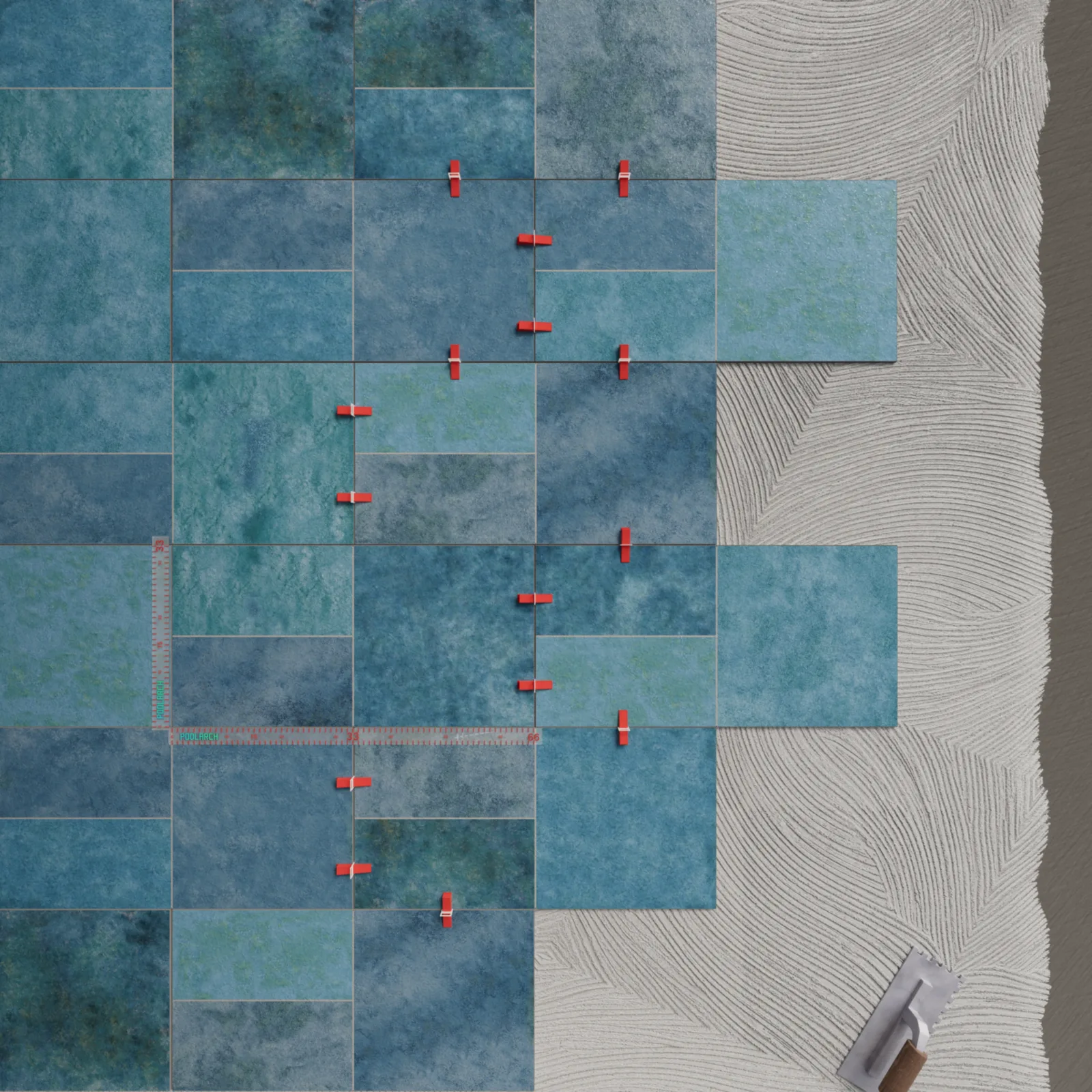
Porcelain Pool Prices and Total Cost of Ownership
Initial cost and total cost of ownership are not the same thing. Porcelain pool prices may look higher than vinyl liner at the moment of first investment, but over a 20-30 year horizon the picture inverts. Once you add the 2-3 liner replacements a vinyl pool needs over that period, plus hidden leak repairs and ancillary materials, the porcelain pool typically ends up cheaper on a lifetime basis.
Natural stone pools carry recurring sealing, grout repair, calcium cleaning and seasonal maintenance line items that quietly inflate annual operating cost. Fiberglass sits in the middle on initial spend, but its dimensional and design constraints create a hidden “opportunity cost” for any project that wants architectural specificity. For a project-specific quote on porcelain pool prices, you can reach our technical team via WhatsApp.
Chemical Resistance and Hygiene
As salt-water (electrolytic) chlorination systems have become more common, the chemical resistance of the pool finish has become even more critical. As we detailed in the chemical exam of porcelain pool tile, full-body porcelain handles salt, chlorine and pH swings markedly better than vinyl or natural stone. The glass-like vitrified surface also minimizes micro-organic adhesion, which keeps the pool healthier with less chemical intervention.
System Integrity: The Real Edge of Porcelain
What truly sets porcelain apart is not a single texture or color — it is the system approach. Within Serapool collections, the pool interior tile, the overflow grate, the stair anti-slip, the coping profile and the terrace pavers are all part of the same product family. From inside the pool to the edge of the terrace, a single architectural language is maintained with no color or texture break. None of the alternative systems can deliver this end-to-end: natural stone struggles with batch tone variation, vinyl is constrained at its perimeter, fiberglass is limited to a single gelcoat tone.
Which Finish for Which Scenario?
For short-lived residential projects where speed and budget are the priority, a vinyl liner can be the right economic call. For users who are happy with a stock pool size and a short delivery window, a fiberglass pool makes sense. Traditional villa gardens and boutique projects with a “natural look” priority can lean on natural stone — but only when the owner has the appetite for ongoing maintenance. When the goal is architectural originality, long service life, system integrity and low operating cost, porcelain pool tile emerges as the most balanced choice, both technically and aesthetically.