Pool Renovation Guide Is As Important As Building a New Pool
A 10–15 year old pool has given its full engineering life to its owner. The mosaics that looked vibrant in the early years dull over time, joints darken, edge stones wear, and tile sections begin to lift. The first thought for most owners is “let’s tear it down and start over” — yet in many cases the real answer is renovation: faster, more affordable, less site fatigue. Poolarch’s Serapool-sourced fullbody porcelain catalog is the quietest yet most powerful way to give an old pool a new life.
Renovate or Demolish: A Decision Framework
There are three scenarios where renovation is the rational call. First: the concrete pool body is structurally sound but the surface tile (mosaic, glazed ceramic, vinyl) has reached the end of its life. Second: the existing overflow system is mechanically correct but aesthetically outdated. Third: waterproofing has failed and a new membrane system can be applied along with the new tile. In all three cases, renovating instead of building new delivers a 40–60% cost advantage. On the other hand, if there are major cracks in the concrete body, settlement marks or fundamental hydraulic design errors, demolition is unavoidable. The decision must be made with an engineering survey.
Removing the Existing Surface: The Site’s First Test
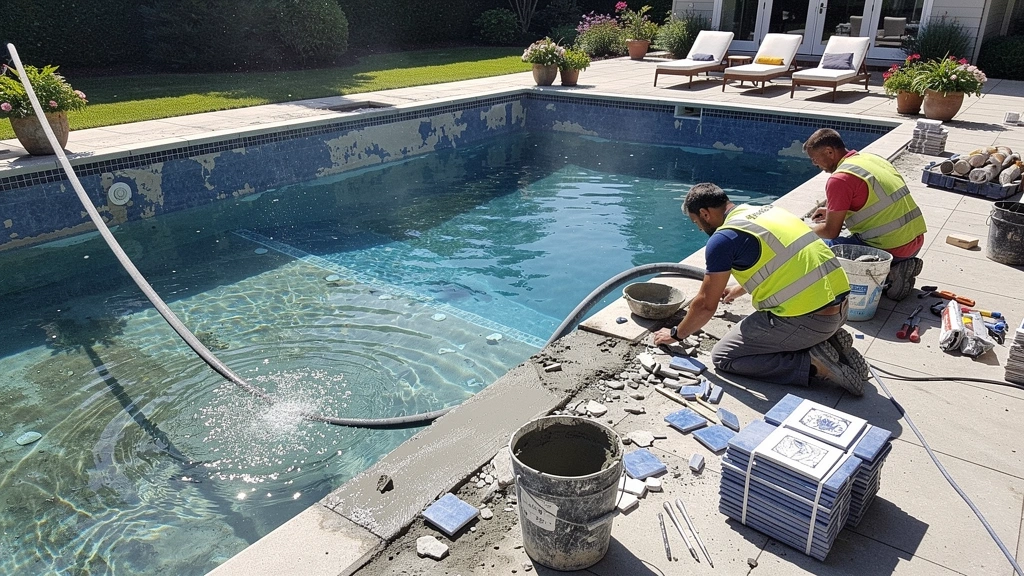
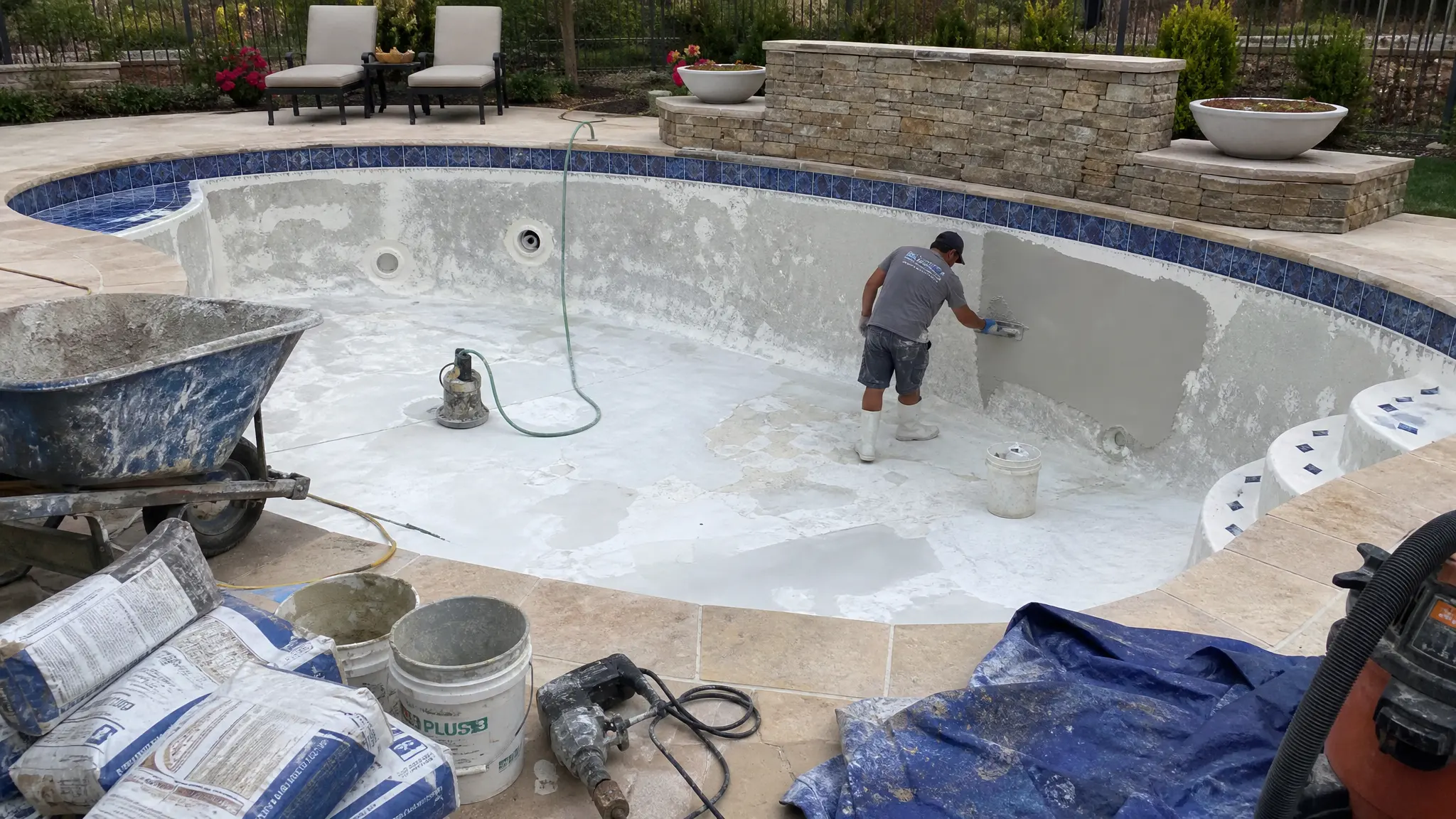
The first step on any renovation site is removing the old finish. Mosaic and glass coverings come off through mechanical chipping and scraping; glazed ceramic puts up a stronger fight, often demanding a pneumatic breaker. After removal, the pool’s interior surface must be stripped down to clean concrete; leaving any old adhesive residue, grout fragments or loose zones puts the new finish at risk from day one. At this stage local damage on the floor and walls is identified; microcracks are addressed with expansion strips and larger separations are sealed with epoxy resin repair.
New Waterproofing: The Invisible Insurance for the Tile
Weakened waterproofing is the most common issue in older pools. On a renovation site, before the new finish is applied, two coats of cement-based flexible membrane or a polyurethane-based liquid membrane must be applied to fully renew the waterproofing. Skipping this step makes even the best porcelain pay the price of weak waterproofing within a few seasons. A suitable primer is applied over the membrane; then the porcelain is ready to be laid using a C2TE-S2 class deformation-resistant pool adhesive.
Strategy for Color and Texture Renewal
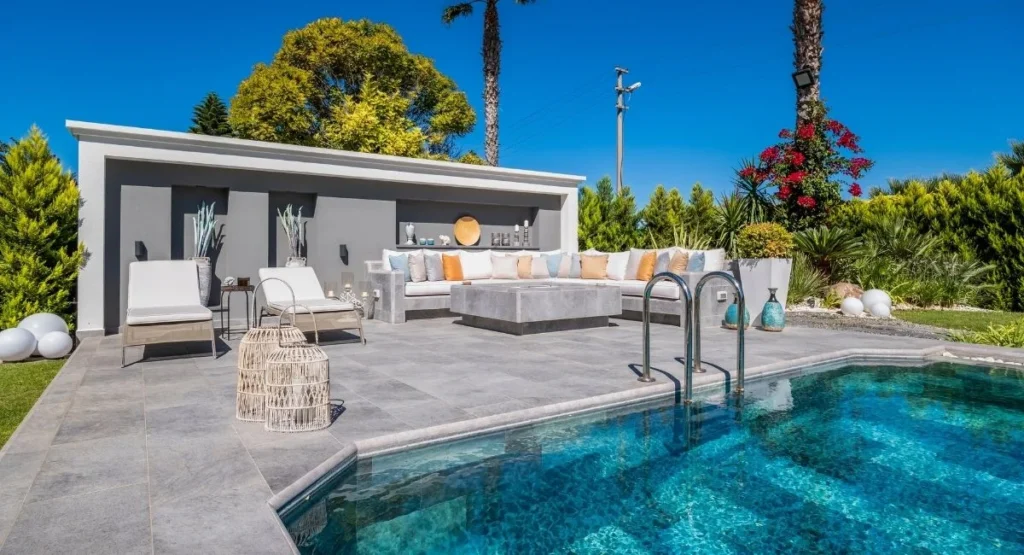
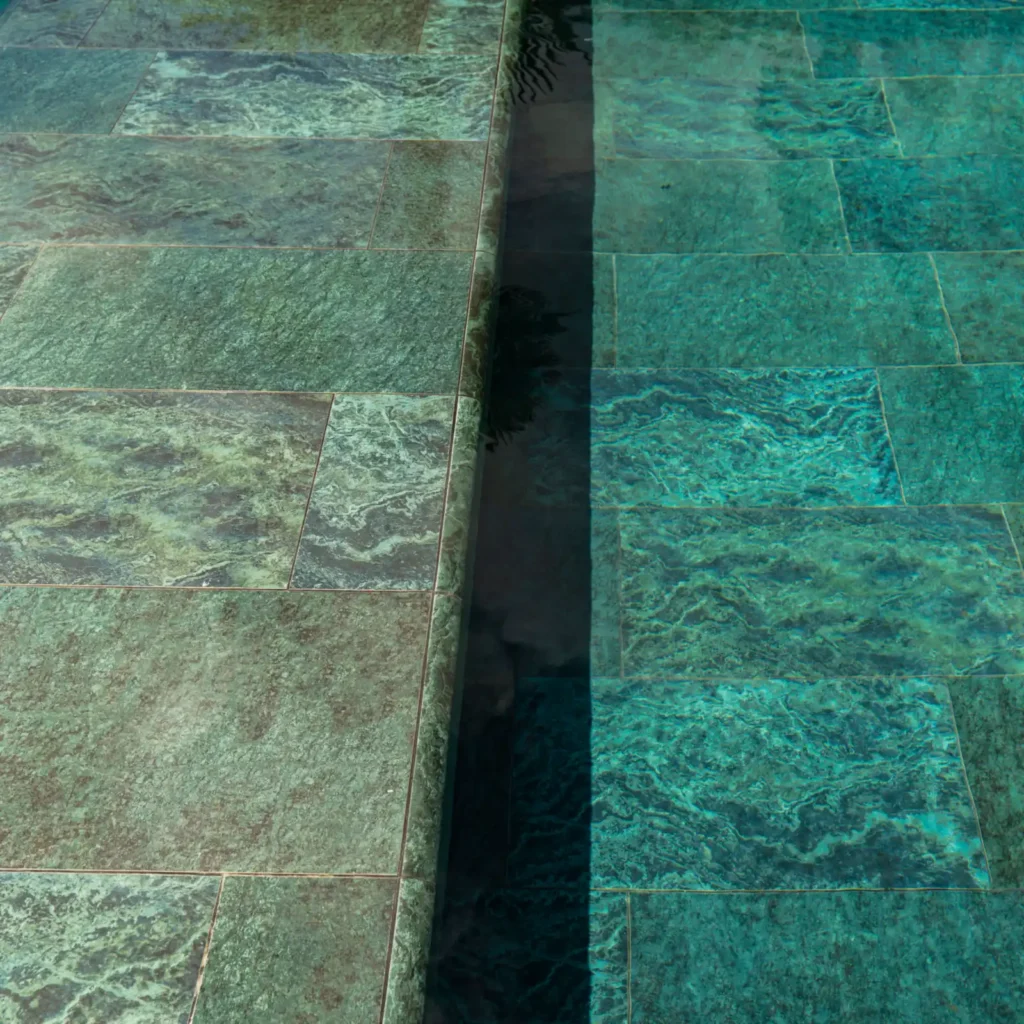
Renovation is not just a technical rebirth, it is an aesthetic one. Old pools were often built with the bright turquoise mosaic of the 80s or the light blue glazed ceramic of the 90s. A new-generation porcelain renovation moves from that old palette to a modern language. Relax Blue Pool Tile preserves the longevity of classic blue while renewing it through texture, while Relax Cemento Grey and Relax Amazing Black carry an entirely modern character. For renovations seeking a natural-stone feel, Antique Grey Pool Tile, Antique Beige Pool Tile and Sera Stone Pool Tile are the three most loved classic choices. The fullbody porcelain structure secures the renovated pool’s next 20 years.
Coping System and Edge Renewal
The second component of most old pools that needs renewing alongside the surface is the coping system. The classic curved marble or granite coping popular in the 90s darkens over time, joints separate, edges crack under freeze cycles. Replacing these with porcelain pool coping means modernizing visually and carrying the durability of the fullbody body to the edge as well. Apache Anthracite, Apache Gray, Apache Unglazed and Apache Cobalt quietly renew the edge architecture of a classic villa pool. In the Universal class, Universal Anthracite Porcelain Pool Coping and Universal Cobalt Porcelain Pool Coping deliver a neutral, classic finish.
Overflow System: From Skimmer to Overflow
A large share of older pools run on a classic skimmer (single-point surface intake) system; this is hydraulically less efficient than a modern overflow channel and creates a more “tired” water movement visually. Renovation is the opportunity to change that logic. By building an overflow channel around the existing concrete pool, transitioning from skimmer to overflow becomes possible. The principal piece carrying the integrity of this transition is the fullbody porcelain overflow tile: Relax Anthracite Hidden Overflow Coping, Relax Beige Hidden Overflow Coping and Relax White Hidden Overflow Coping align the channel to the millimeter. On the grate side, the most common recommendation for renovated pools is the flex grate, because the existing concrete body has made tiny settlement movements over the years. Pool Garden Grey Flex Grate, Pool Garden Beige Flex Grate and Natural Mocha Flex Grate absorb these movements and keep the edge line straight.
Renewing the Deck and Walk Strip Together
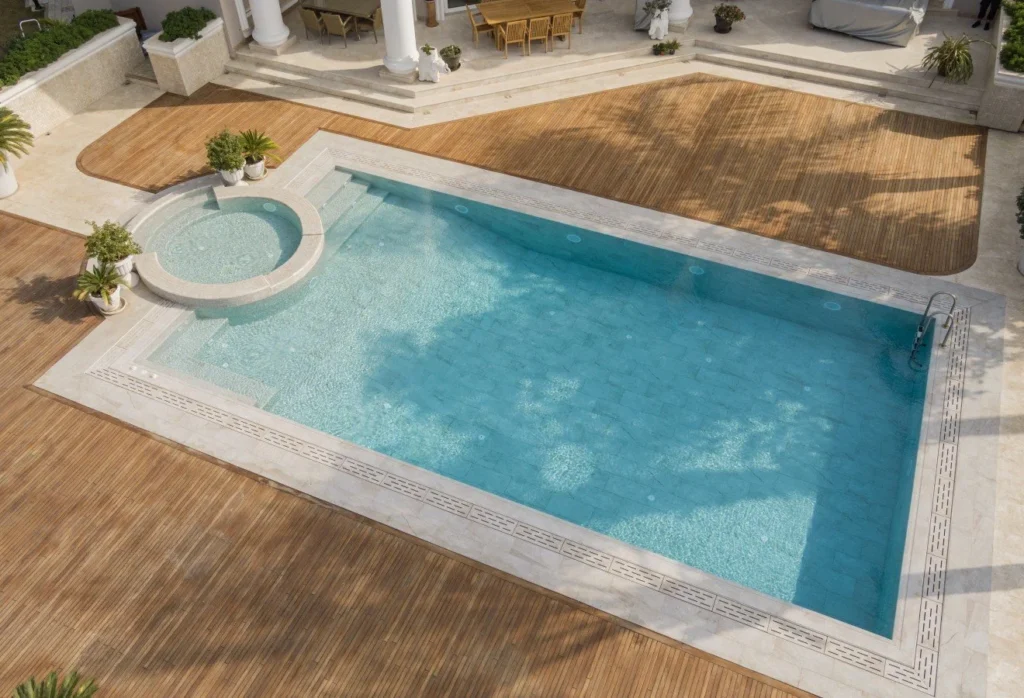
There is one area often forgotten in the renovation plan: the deck. The pool itself is renewed shining, the coping is replaced, but the old ceramic deck around it is left as is. The result is a visually patchy pool perimeter. The right renovation strategy renews the deck within the same single-collection logic. Pool Garden Grey, Natural Mocha Pool Tile and Silver Travertine Pool Tile deliver pieces from the same color family for both the basin and the deck. For high-traffic hotel and resort renovations, Renaissance Porcelain Terrace Anti-Slip is the preferred choice.
Stairs, Steps and Corner Details
The fastest-wearing zone of older pools is the stair steps; constant foot contact and high water movement make this a priority renovation area. Porcelain anti-slip stair tile in a renovation site brings two wins: a hygienic, easy-to-clean surface and a slip resistance value that meets standards. For corner and finishing details, convex and concave porcelain pieces replace the classic mosaic corners that wear out over the years. Antique Grey Porcelain Convex, Antique Beige Porcelain Convex and Snow White Porcelain Convex are frequently used in renovations.
Process Timeline: How Long Does Renovation Take
A standard villa pool (8×4 m) renovation can be completed within 3–4 weeks with proper planning. Week one: removal and surface preparation. Week two: waterproofing and primer. Week three: porcelain installation and grouting. Week four: filling, chemical balancing and handover. For hotel pools, scheduling this in the off-season keeps operations uninterrupted; the property opens the season with a 100% renewed pool. Sound project management is the single biggest factor in minimizing revenue loss during renovation.
Detailed View
Poolarch delivers the detail sheets prepared specifically for renovation sites by the Serapool engineering team to the field crew. When fullbody porcelain is applied over an existing concrete surface, the sheets clarify which adhesive + grout combination will bond the old and new together. For renovation projects across Europe, the Gulf and North Africa, the Serapool global technical support team conducts remote pre-survey using existing pool photos and as-built drawings, prepares country-specific certification and customs files, and aligns the site flow with the seasonal calendar for hotel and resort renovations.
Renovation Gifts the Old Pool a New 20 Years
When renovated correctly, a pool gains a new lifespan not just visually but mechanically. The right surface, the right waterproofing and the right edge system together make the renovated pool indistinguishable from a new build — and at a shorter timeline with a more economical investment.
Pool Tile Prices
Don’t wait to transform your old pool into a modern design without tearing it down and rebuilding from scratch. On pool ceramic prices, pool tile prices and pool porcelain prices, Poolarch delivers a tailored discount structure scaled to your renovation project and a delivery plan aligned with your site flow.
Send us photos of your existing pool, the floor plan and the target style (classic / modern / luxury / wellness); to receive a renovation quotation within 24 hours, use the link below. Our technical team consolidates the structural analysis, the recommended tile series and the staged application plan into a single file. Get a quick quote on WhatsApp.