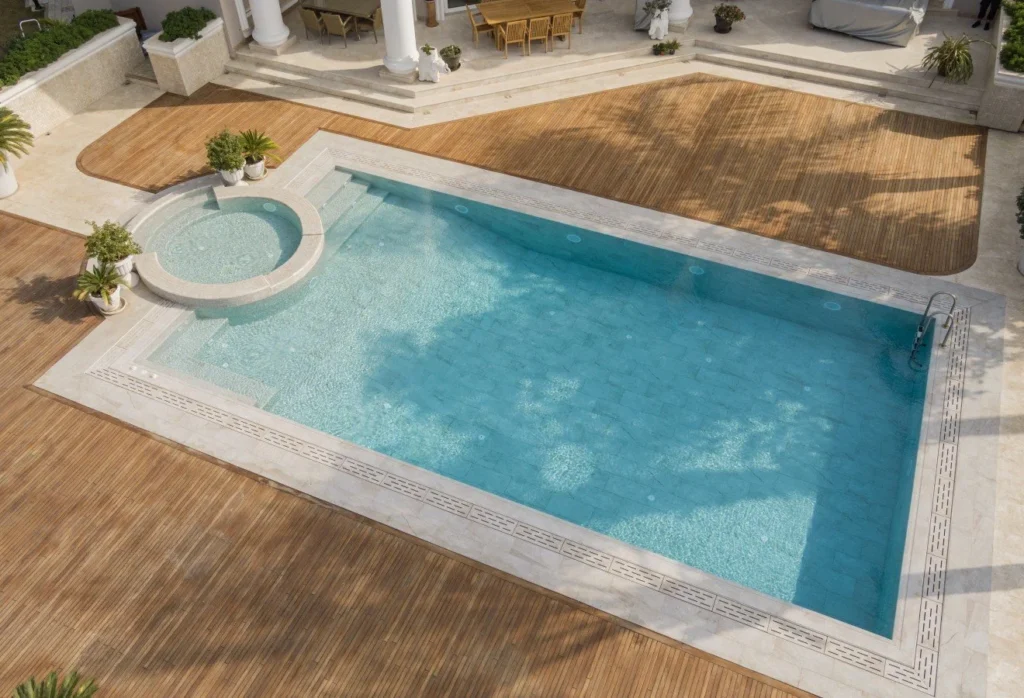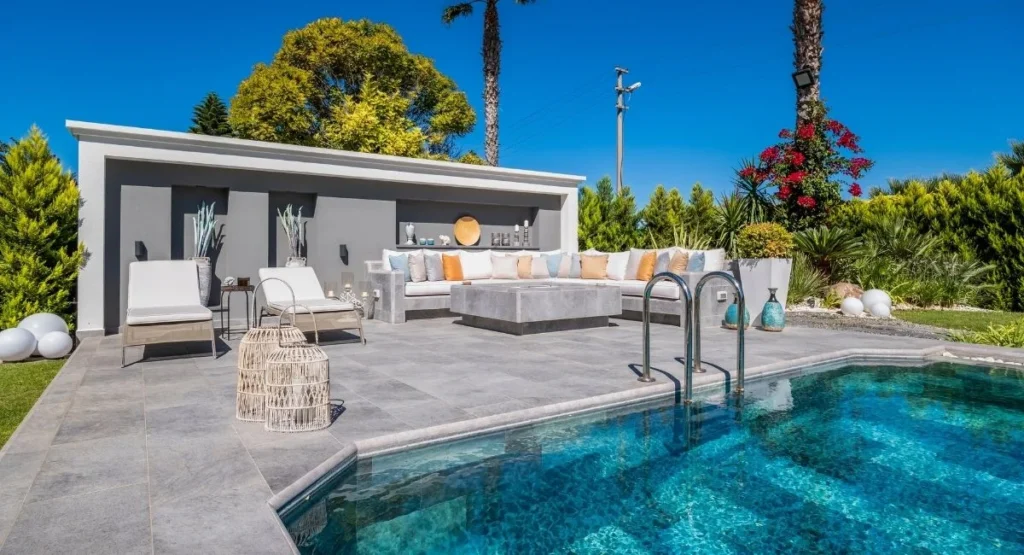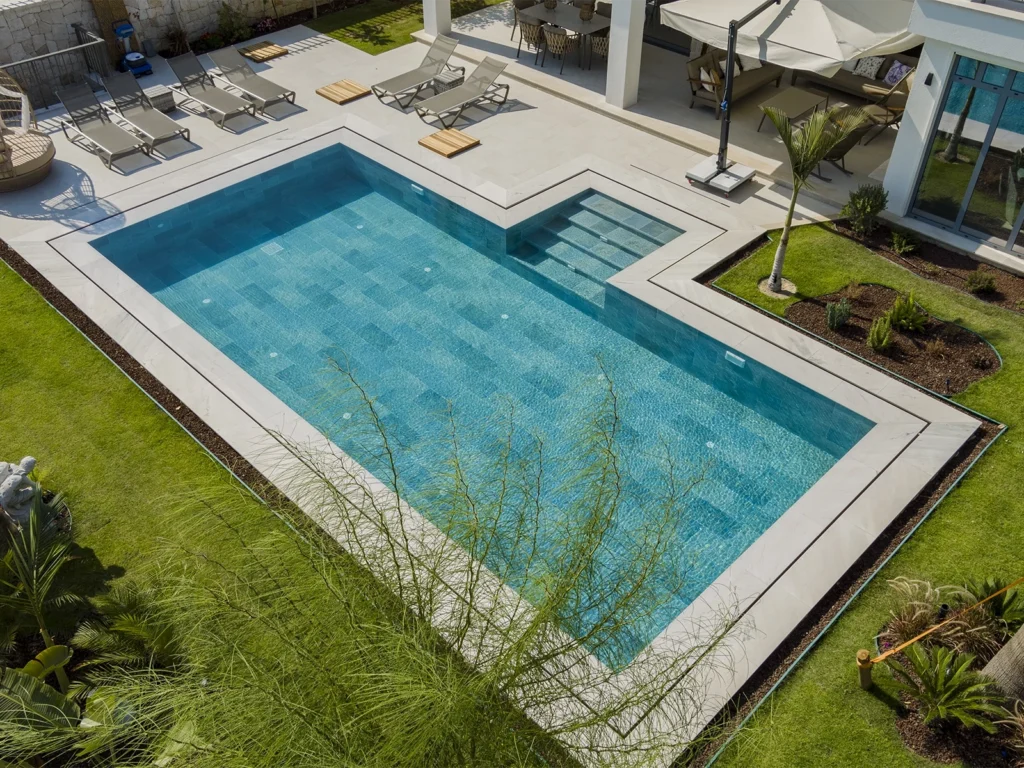
The success of a high-end pool project is measured not just by the color of the water, but by the precision of the edge details. The pool coping (havuz tutamağı), which frames the pool, provides a vital grip for swimmers and directs the overflow mechanism, is one of the most technically demanding components of the entire structure. Choosing the right pool coping based on the pool’s operational principle (overflow type) ensures not only visual harmony but also the long-term efficiency of the drainage and filtration system.
1. Pool Coping in Deck-Level (Overflow) Systems
Deck-level pools—often referred to as overflow pools—rely on water cascading from the entire perimeter or a specific edge into an external channel hidden under a grate. In these designs, the water level is flush with the pool deck, creating a stunning glass-like surface. The pool coping used here must facilitate a smooth flow into the channel without causing turbulent splashing or safety hazards.
Recommended porcelain pool coping models for overflow systems:
- Beige Stone Classical Porcelain Pool Coping: Delivers a timeless, sophisticated look with its natural stone texture.
- Potikare Cobalt L Porcelain Pool Coping: Its L-shaped structure ensures a soft transition for the water as it moves toward the channel.
- Apache Anthracite Porcelain Pool Coping: A premier choice for modern, minimalist projects.
Technical Sizing: When selecting dimensions for overflow systems, “pool wall thickness” (perde kalınlığı) is the most critical variable. A pool coping that does not align perfectly with the structural wall will lead to installation failure and poor water management. Architects must calculate the concrete wall thickness plus the plaster and adhesive layers to choose the correct width for the coping.
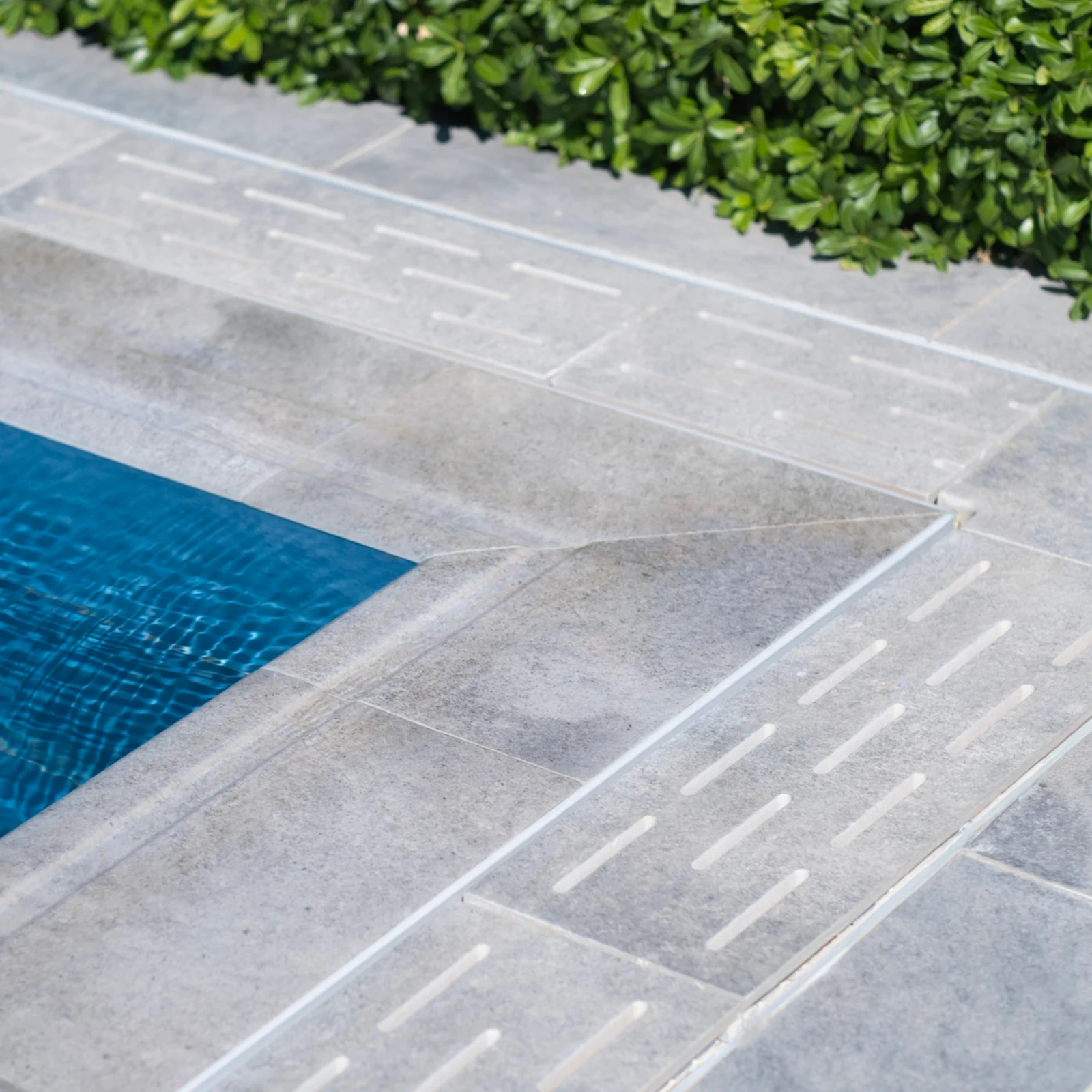
2. Selecting Pool Coping for Skimmer Systems
Skimmer pools are the traditional standard where the water level remains approximately 10-15 cm below the edge. Suction units called “skimmers” clean the surface. In such pools, the coping acts as a definitive border, designed to keep water from spilling onto the deck and to provide a secure handhold for those inside the water.
Ideal coping examples for skimmer systems:
- Beige Stone Flat Porcelain Pool Coping: A flat, sleek profile for a minimalist finish.
- Apache Unglazed Linear Porcelain Pool Coping: Offers maximum unglazed slip resistance for safety.
- Potikare Cobalt Set Porcelain Pool Coping: Features a “set” or raised edge, making it significantly easier to grip while swimming.
Just like in overflow systems, the final decision for the coping in skimmer pools should be made based on the thickness of the pool wall and the surrounding coping area. Porcelain’s inherent durability makes it the perfect material to withstand the constant wet-dry cycles of a skimmer edge.
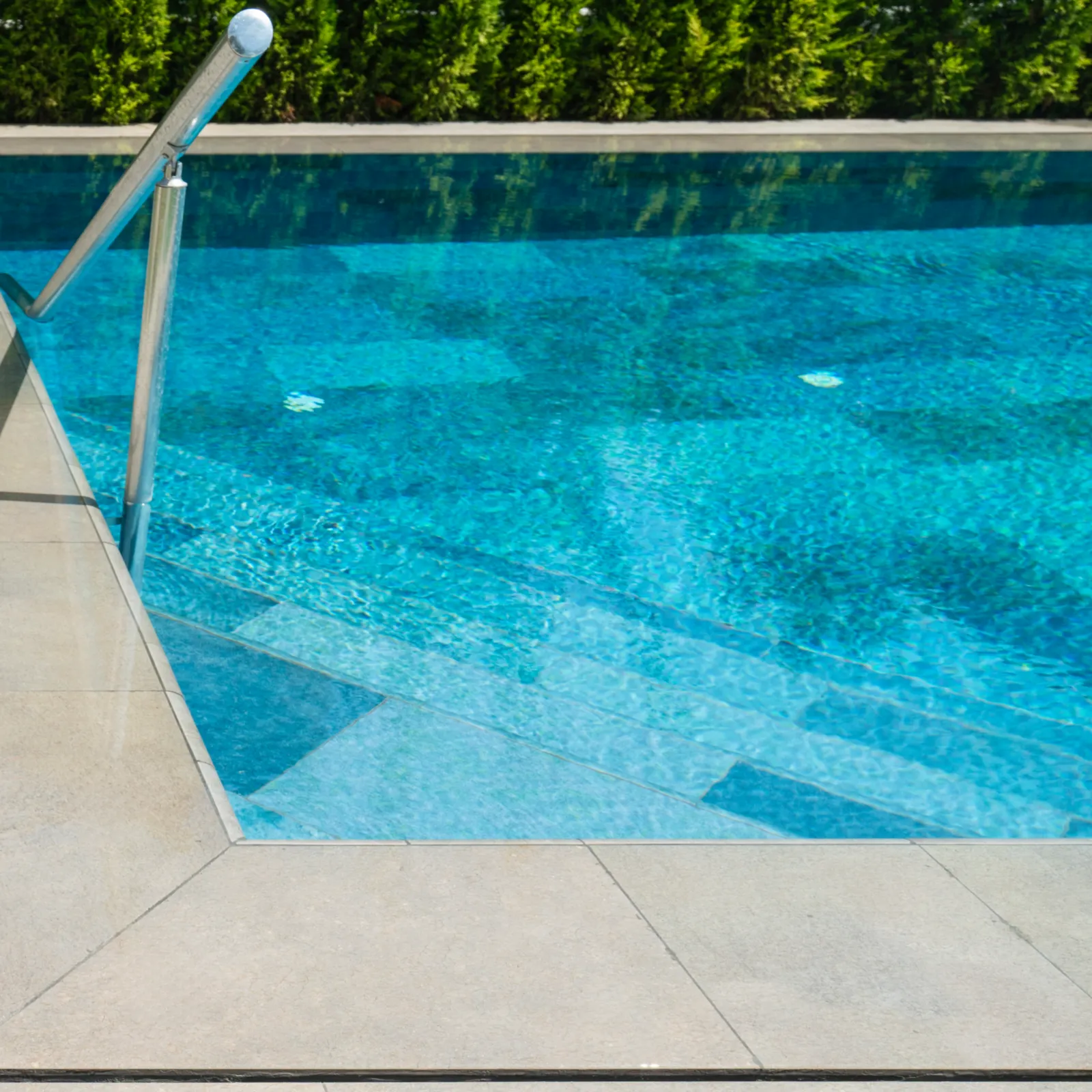
In contemporary architecture, “Slot Overflow” has become the gold standard for luxury resorts and villas. This system operates on the overflow principle but replaces plastic grates with a narrow 2.5 cm to 4 cm gap between two porcelain tiles. The water disappears into this “slot,” creating a seamless look. The coping required for this system must be exceptionally strong and precisely cut.
The premier representative of the slot overflow system:
- Beige Stone Slot Overflow Porcelain Pool Coping: This is a high-resistance, thickened porcelain product. Its most vital feature is the “beveled” (pahlı) edge where the pool meets the overflow slot. This bevel is a crucial safety feature; it protects swimmers’ toes from sharp edges, turning an accidental stub into a safe touch.
This system is usually a two-part solution. Behind the main coping, the Pool Garden Beige Infinity Porcelain Pool Coping tile is installed. Both pieces share the same texture and thickness. The slot overflow tile is beveled on one side, ensuring that when the two components are placed together, the “slot” is perfectly formed with smooth, safe edges for barefoot traffic.
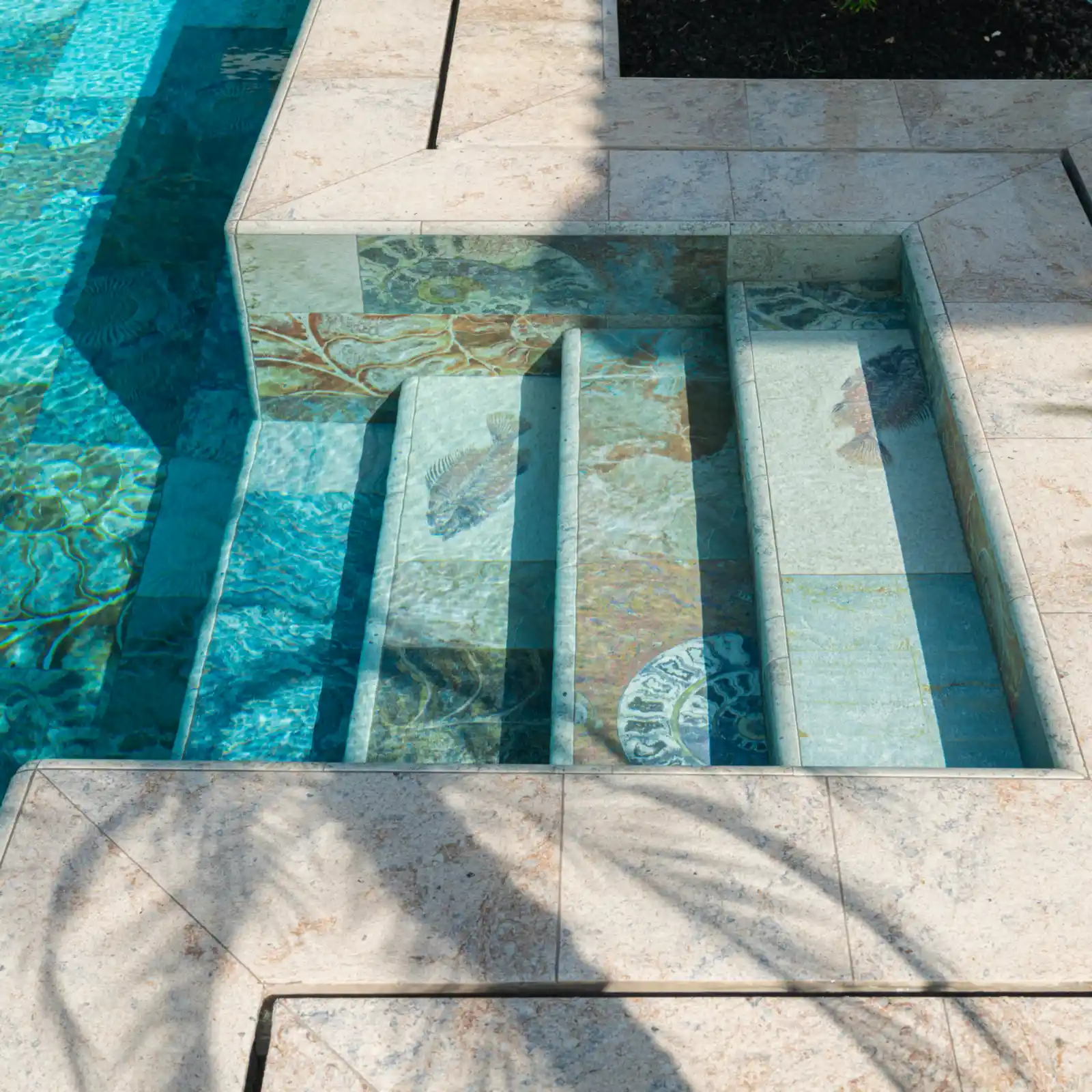
4. Why Porcelain Pool Coping is Non-Negotiable?
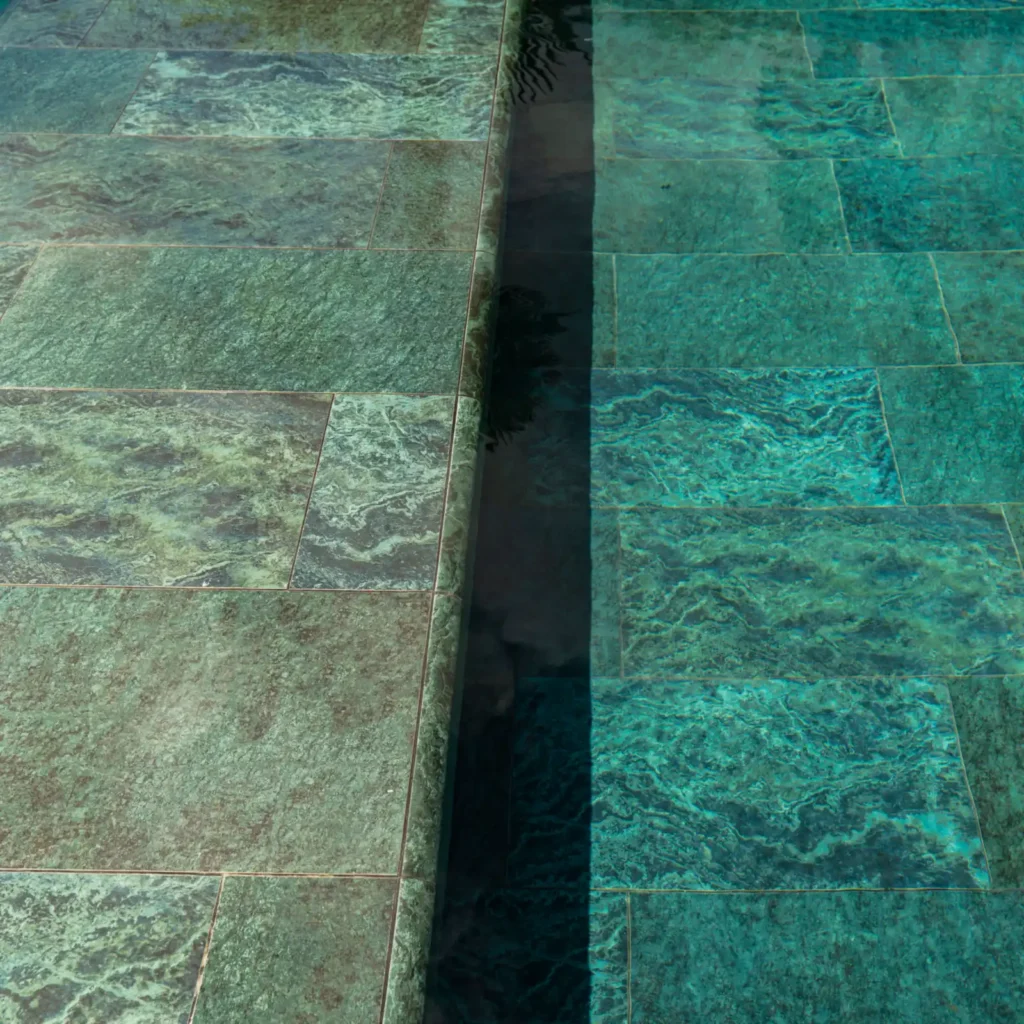
Using porcelain for your pool coping is not just about aesthetics; it is about engineering. Porcelain has a water absorption rate of less than 0.1%, making it naturally frost-proof. In colder climates, traditional stone or coping can absorb water, freeze, and crack. Porcelain avoids this entirely.
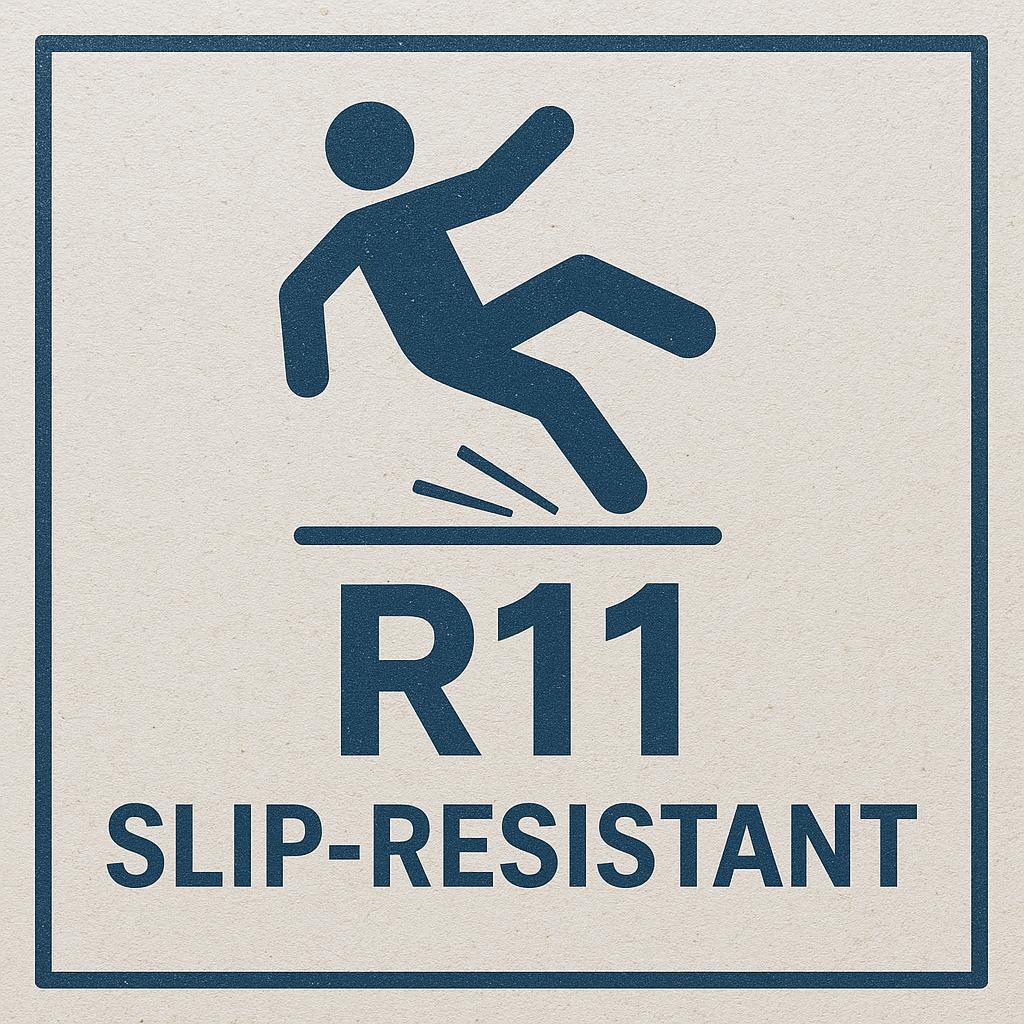
Furthermore, pool chemicals like chlorine and salt are incredibly aggressive. Natural stones can dissolve or stain over time, but a porcelain pool coping remains untouched. With high anti-slip ratings (R11-R12), it provides the safest possible walking and gripping surface. When you choose your pool coping from the Poolarch collection, you are choosing a product that will remain vibrant and structurally sound for decades.
Conclusion
Whether your project is an infinity-edge masterpiece or a practical skimmer family pool, the choice of coping dictates the final quality. By selecting a pool coping that matches your pool wall thickness and your specific overflow system, you ensure a lifetime of beauty and safety. Explore the technical porcelain solutions at Poolarch today and give your pool the professional finish it deserves. Investing in a premium coping is the secret to a flawless aquatic design.